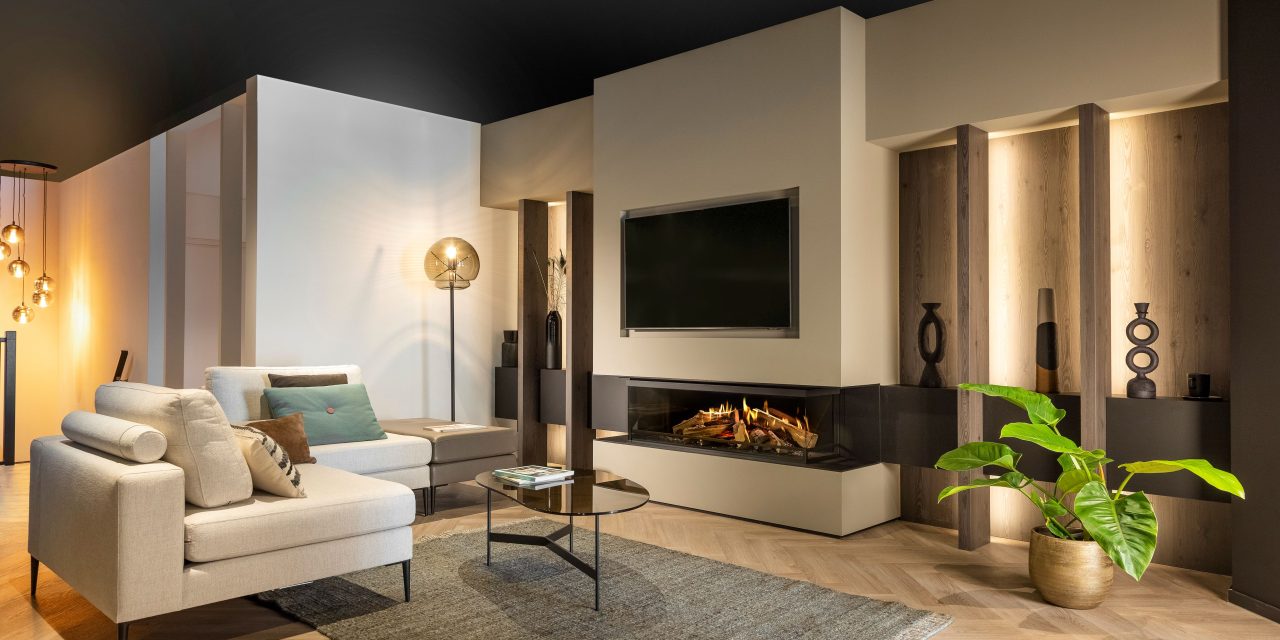
For centuries, fireplaces have been a central feature of the home: symbols of warmth, gathering and comfort. As communities move toward more sustainable construction and reduced reliance on fossil fuels, the traditional fireplace is evolving. NetZero Fire has emerged as a notable player in this shift, earning a reputation in the industry for the authenticity of its alternative fireplace technologies, where romance and realism remain central to the experience.
Founded by Bill O’Donnell, with Jennifer Wall supporting sales, marketing and operations, the company is headquartered in Hiawatha, Iowa, just north of Cedar Rapids. We sat down to talk about the evolution of the modern fireplace, the technologies behind fossil-free fire, how these solutions support net-zero homes and flexible design integration, and where innovation in the industry may be heading next.
What struck me most was how thoughtfully these systems are designed; not only to recreate the visual magic of a real flame, but also to integrate easily into contemporary homes.
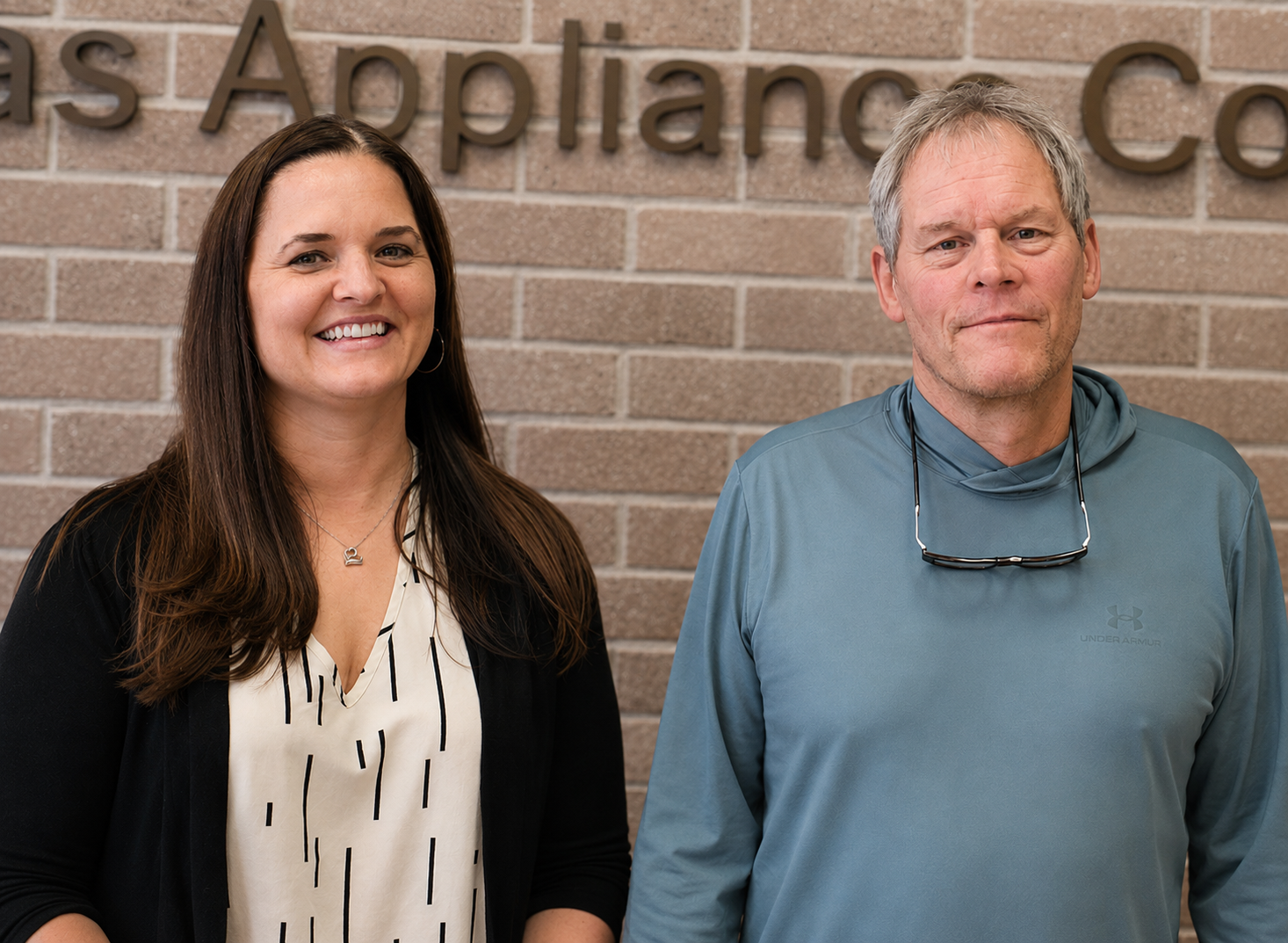
Maria: How did NetZero Fire come about, and how do you see the fireplace industry evolving today?
Bill: Our parent company, Johnson Gas Appliance Company, has been around for about 125 years. It originally focused on industrial furnaces and heating systems, and we’ve been manufacturing gas fireplaces since 1980. NetZero Fire was launched more recently, around 2020, near the end of the COVID period.
We wanted a clear identity and a mission centered on sustainability. The idea was to build a company focused on innovation and to anticipate where the industry is heading. Fireplaces have evolved over time. Wood-burning fireplaces existed for thousands of years, and then gas technology came along and eventually became very successful in residential homes.
Maria: Your company offers several technologies. How do they differ and what innovations make them feel so authentic?
Bill: Each technology is unique. The holographic fireplaces use screen-based technology to create the flame effect and have become one of our most popular products because they closely replicate a traditional fireplace.
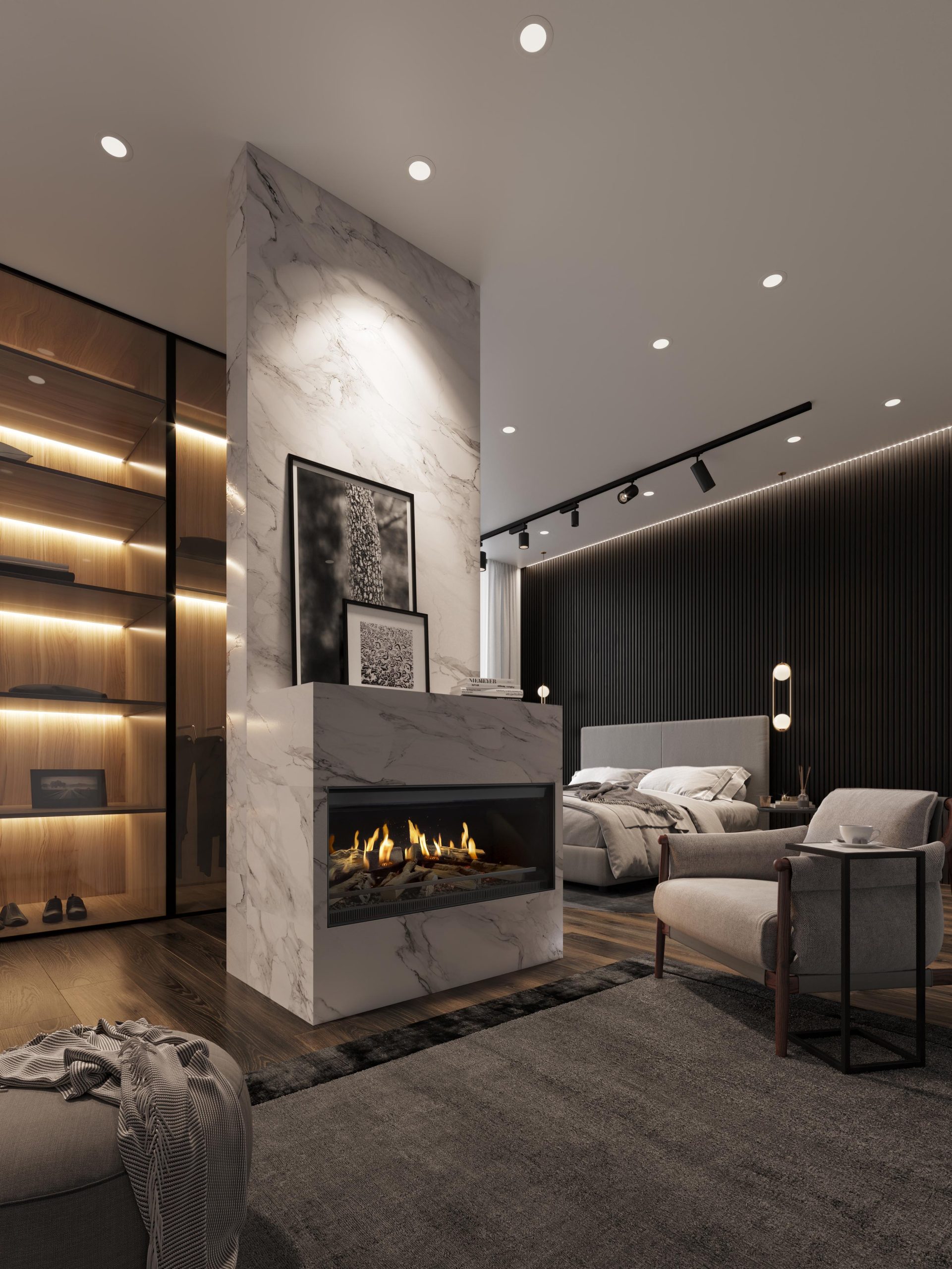
Jennifer: They’re a great option for people who want the look of a real fire but live in areas with gas bans or want a more environmentally conscious solution. These fireplaces don’t require venting or gas lines, yet they create a remarkably realistic flame effect.
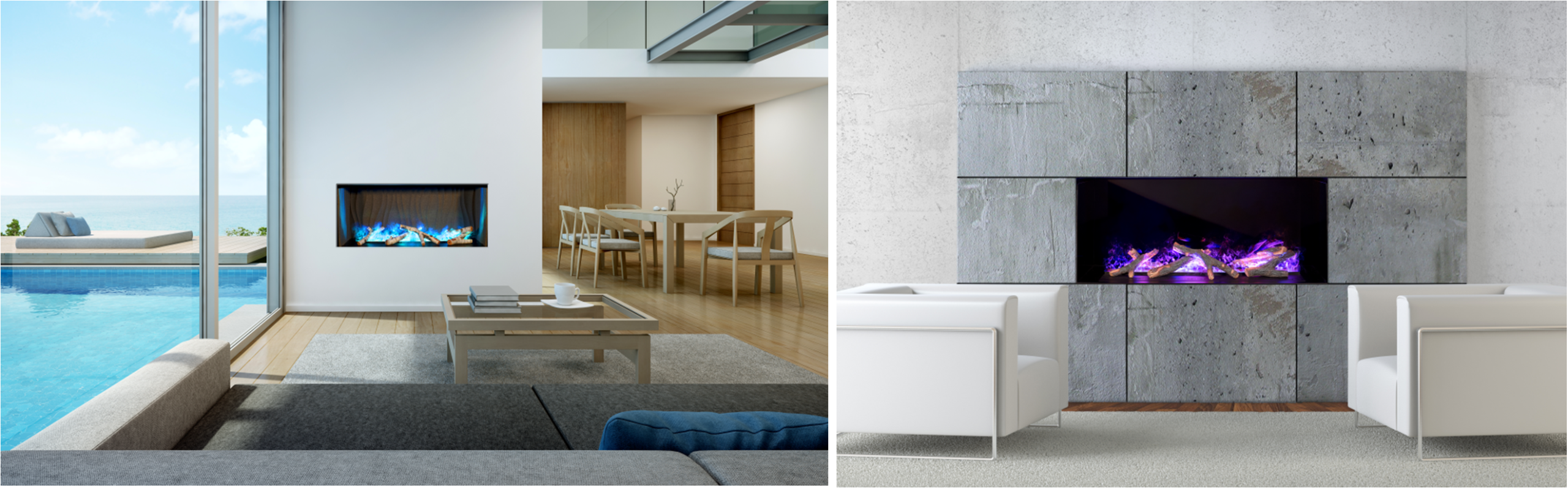
Our system uses a holographic flame created with a top screen reflected onto angled glass, combined with another screen behind it that projects a second flame image. This creates depth in the fire. That dual-flame depth is patented technology unique to NetZero Fire.
Bill: At its simplest, our Waterplace™ fireplaces create illuminated vapor. Think of the mist that rises from boiling water, our system lights that vapor to create the flame effect. In essence, the technology vibrates the water in a way that shapes the mist, so it resembles a flame.
Jennifer: Instead of heat, we use ultrasonic vibration to turn water into a fine mist. Fans move the mist upward, and LED lighting illuminates it to create the flame effect. The result is a very mesmerizing visual experience.
Some models allow users to adjust colors and effects, while others recreate the classic orange flame tones. Because the system uses only water, air and light, it opens many creative installation possibilities, from fireplaces to tables or other architectural features.
The unit can either be connected to a direct water line or filled manually using a small reservoir. That flexibility allows designers to install it without needing plumbing if they prefer.
Bill: We’ve studied how much moisture it adds to a room, and it’s actually a very small amount, less than what you would see from ethanol combustion. Many people assume it works like a humidifier, but it’s different. The mist is extremely fine and dry, so it doesn’t make the room feel humid, and you don’t feel moisture when you pass your hand through it.
Maria: What kind of space does the system require?
Bill: The fireplaces come in several lengths; typically, 16, 20, 40, or 60 inches. They are all about the same height. The main difference is the length of the flame feature.
Jennifer: Each 20-inch section contains a two-liter water tank. If the tank option is used instead of the plumbing line, it runs for about 20 hours before needing to be refilled. Larger models simply combine multiple tanks. The technology opens many creative design possibilities, and we’ve seen installations in fireplaces, tables and other architectural elements.
We were also honored to have the E-One Holographic technology recognized by the Smithsonian Design Museum in 2025 for innovation in sustainable living and comfort-focused design.
Our goal is to make it easy for people to enjoy the atmosphere of fire in a safe and sustainable way. The E-One systems are increasingly used in places like retirement communities and residential clubhouses because they require almost no maintenance. They also eliminate many of the safety concerns associated with traditional fireplaces.
Maria: How do the costs compare with traditional gas or wood fireplaces?
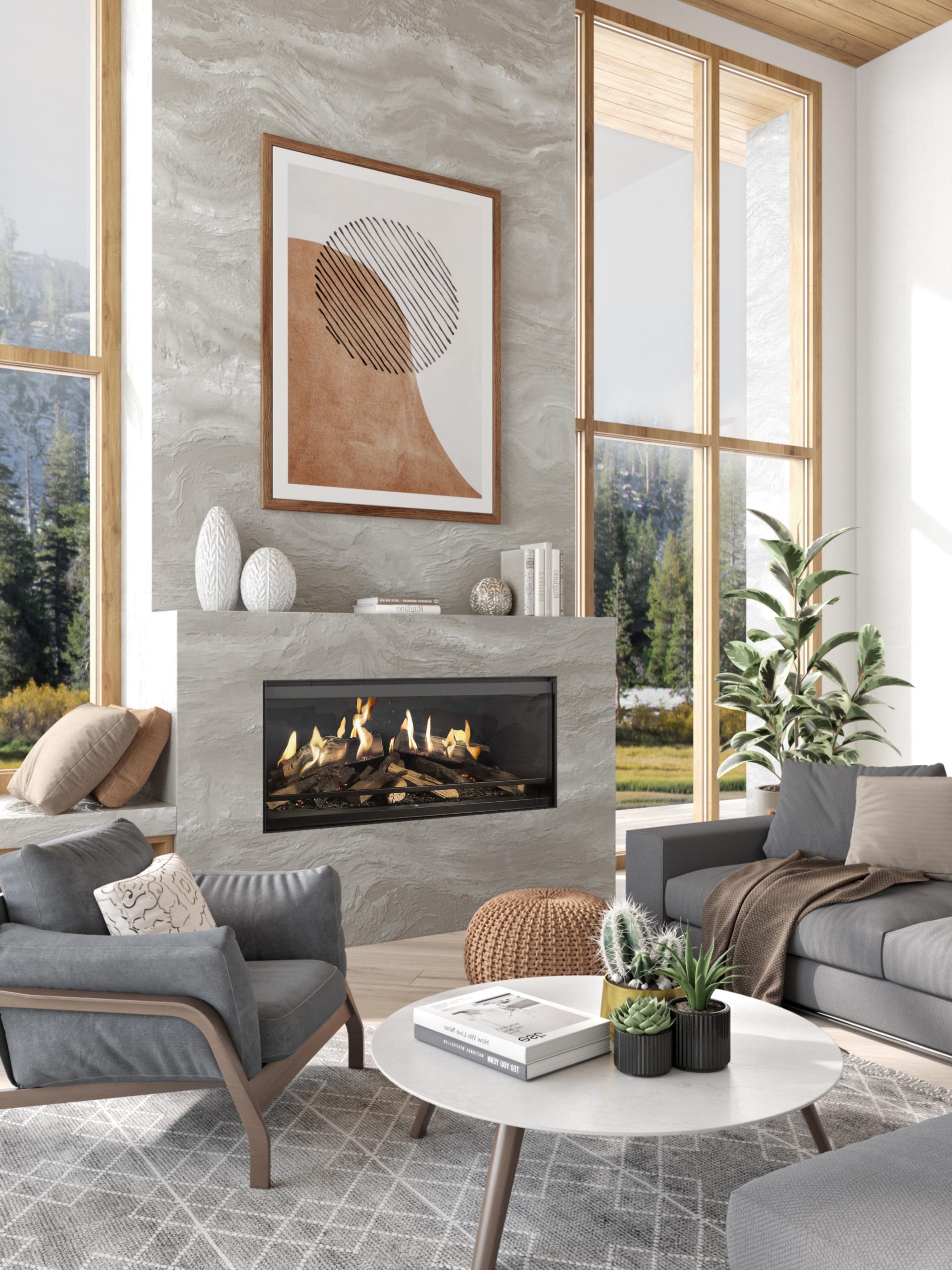
Bill: That’s a great question. Products like our Waterplace and holographic fireplaces can initially cost more than gas fireplaces. But when you factor in installation: permits, venting, gas lines, and heat clearance considerations, the overall cost often evens out. And as these technologies become more common and production grows, costs naturally begin to come down.
Fireplaces create an emotional connection in a home. Our goal is to preserve the experience of the hearth while adapting it for a more sustainable future. That sense of romance and comfort is timeless, and there’s no reason sustainability can’t be part of it.
Our focus is always the fire itself. If the flame looks realistic, people are less concerned about whether the source is water, electricity or gas. With the Waterplace, a key innovation has been controlling the mist; directing the vapor and using vibration to shape it so it behaves like a flame. We’ve also introduced log sets and optional heating elements so the fireplace can provide warmth as well as ambience.
Jennifer: A lot of the realism comes from small technological details. For example, we program our holographic displays so pixels that should appear black are completely turned off. That prevents the gray glow you often see on screens and helps the fire look more natural.
We also use a masking screen that blends the images together to create the holographic effect. The result is a flame that looks convincing even when you stand very close to it, and the video loop is carefully designed so you never notice it repeating.
Maria: I imagine NetZero is poised for growth with performance homes and high-performance buildings becoming mainstream.
Bill: Many new communities are no longer installing gas lines. Cities across North America are reconsidering fossil fuels in residential construction, and some developments are already building homes without natural gas. Our goal is to provide a viable alternative; something that still offers the warmth and focal point of a traditional fireplace, but without relying on gas or wood.
As far as customization, we’re moving in that direction. For example, Waterplace units can be connected in sections. If someone wanted a very long linear installation across a wall or along a bar, you could link multiple units together. Currently they’re built in 20-inch increments, but the flexibility already allows for many creative applications.
Jennifer: Designers have been extremely creative. We’ve seen installations integrated into custom tables, sculptural wall features, and even under staircases. Because the system doesn’t require venting or combustion, it can be installed in places where traditional fireplaces would never work.
Bill: Interestingly, the name Waterplace came from a hotel installation. We placed a prototype in a lobby, and when I asked the staff about the fireplace, a young employee said, “That’s not a fireplace. That’s a waterplace.” We thought that was the perfect name!
Maria: Where do you see fireplace technology heading in the next decade?
Bill: A lot of innovation will happen through holographic technology and smart home integration. We’re working toward allowing users to customize their fire; adjusting the flame height, colors and style directly through smart controls.
In the future, people could even download different fire experiences via the cloud, changing the look of the fire entirely.
Ultimately, our mission is to create high-quality fireplaces that reduce environmental impact while delivering beautiful, atmospheric spaces. We want to lead the market with innovative, energy-neutral technologies that help people enjoy fire while managing their energy footprint.
Final Thoughts
Technology may be transforming the way we create fire, but the reason we gather around it remains unchanged. What NetZero Fire is exploring is not simply an alternative to traditional fireplaces, but a way to carry the experience of the hearth into a more sustainable future.
Through water vapor, holographic imagery, and innovative design, they are redefining how fire can live within modern homes. The fuel may be different, but the magic is still the same, because at the end of the day, people are not drawn to fireplaces for heat alone, but for the feeling they bring to a space.