Photos: High, Low, Buffalo
In custom residential architecture, there are obstacles and opportunities. It’s the architect’s obligation to convert contentious considerations into celebratory observations. Such is the quest of architect Adam Wagoner, Owner and operator of boutique design practice, High, Low, Buffalo. Based in Denver and serving clientele across Colorado and beyond, Wagoner seeks the unexpected in everything he does.
“I grew up in Kansas, the son of a builder,” begins Wagoner from his studio in Denver’s Highland Park neighborhood. “My father and uncle earned a good living building single-family homes together. So, I decided to pursue a degree in architecture. The idea was to be a better builder by the time I took over the family business. However, within two weeks of arriving at Kansas State University, I became obsessed with architecture. My life has been about design ever since.”
Graduating in 2009, Wagoner faced the bleak days of the downturn at the peak of the Great Recession. Rather than struggling to find an entry-level position at a design practice, Wagoner was fortunate to have the opportunity to design and build a small commission for an entrepreneurial uncle with some means.
“One of my uncles, who was a physician assistant, offered me the opportunity to design a flagship store for a hotdog restaurant chain,” says Wagoner. “Without any experience or guidance, my wife and I started our first design practice, drinking from the fire hose, building that hotdog stand. We hired a retired architect to redline our drawings and met her at a Starbucks for reviews.”

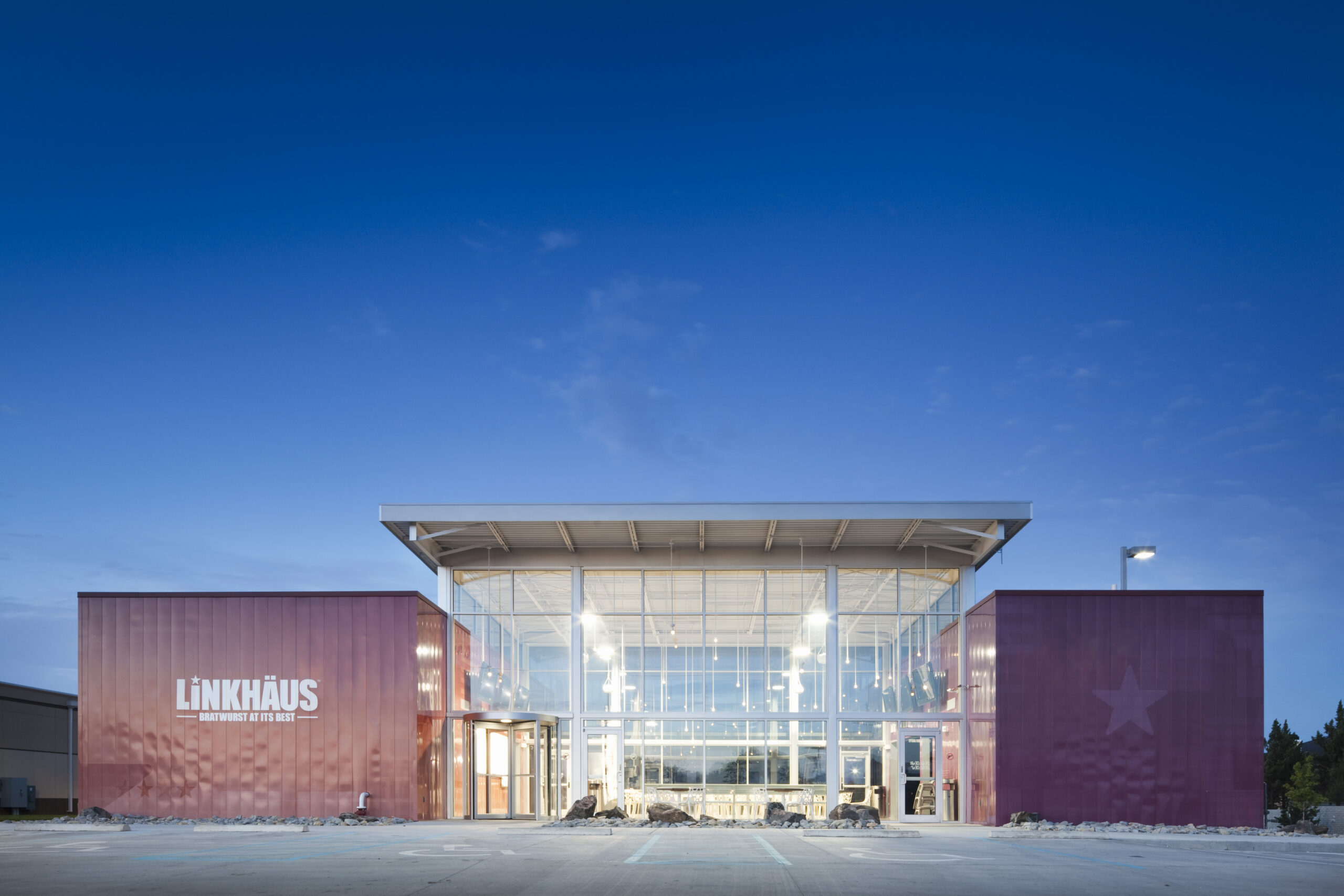
The hot dog joint was a hit. The uncle and his investors quickly started scouting additional locations around Wichita. Along the way, they found a handful of old buildings well-suited for rehabilitation and hired Wagoner to convert them to mixed-use for lease and resale. Looking for new horizons, Wagoner and his wife, Rebekah, spent a few years in the Netherlands. Returning stateside, Wagoner decided a master’s degree would better his career prospects. So, he set his sights on Yale University. During his studies, Wagoner learned from professors working on projects in West Africa and Mexico, broadening his horizons and problem-solving skills.
Finally, settling in Denver in 2016, Wagoner has sought to elevate the everyday through innovative, soulful design. Along the way, he’s also made a contentious commitment to sharing knowledge within the architectural community. He has been a Visiting Lecturer at the University of Colorado Denver’s College of Architecture and Planning for nine years. He also created and hosts a Podcast called ARCHITECT-ING that documents the stories of people who live the challenges and triumphs of designing and building spaces for others.
His contributions have been noticed. He was named the 2024 Architect of the Year by AIA Colorado. Awarded by peers, the distinction recognized Wagoner’s exceptional design skill and dedication to uplifting Colorado’s architectural community. Today, Wagoner and his wife practice independently. She is at an internationally acclaimed mega-practice employing more than 7,000. He, at his own. High, Low, Buffalo employs slightly fewer than a full few.
“High, Low, Buffalo is a game my family plays at dinner every night to check in on our day. What’s your high, what’s your low, and what is your buffalo – or unexpected surprise?” shares Wagoner of the naming convention behind his firm’s unusual moniker. “At High, Low, Buffalo, we search for dynamic moments and unexpected surprises that elevate the experience of everyday life. We’re trying to create soul-stirring architecture, which for me is about discovering the unexpected.”
Trained at Yale and Kansas State, Wagoner approaches design pragmatically – challenges, solutions, formal, and diagrammatic. It’s a proven approach, and rather necessary for the kinds of commissions High, Low, Buffalo is most attracted to.
“I like to gather as much information as I can on the site, the situation, the client, and their program,” says Wagoner. His practice has evolved from a digital client questionnaire to a custom AI chatbot that probes customers on needs, wants, and desires in their new home. “I take the base information and diagram out the home’s specific spaces and the qualities of each. Then, it’s about taking those components and trying to find a golden idea from which a concept is formulated. The design may be inspired by the site, context, or something the owner is interested in, like art or photography.”
Turning obstacles into opportunities is often an iterative process, which Wagoner embraces as the basis of good design.
“I want to share at least three options developed around the core concept,” continues Wagoner. “Most importantly, I am not afraid of letting the clients react. When they start adding ideas, questioning, and Frankensteining concepts together, I find that we develop a personalized architecture that is better than either of us could have imagined on our own.”
As Wagoner approaches the end of his second year in business as High, Low, Buffalo, he has a contingent of custom homes scattered across Colorado’s varied terrain on the drawing boards.
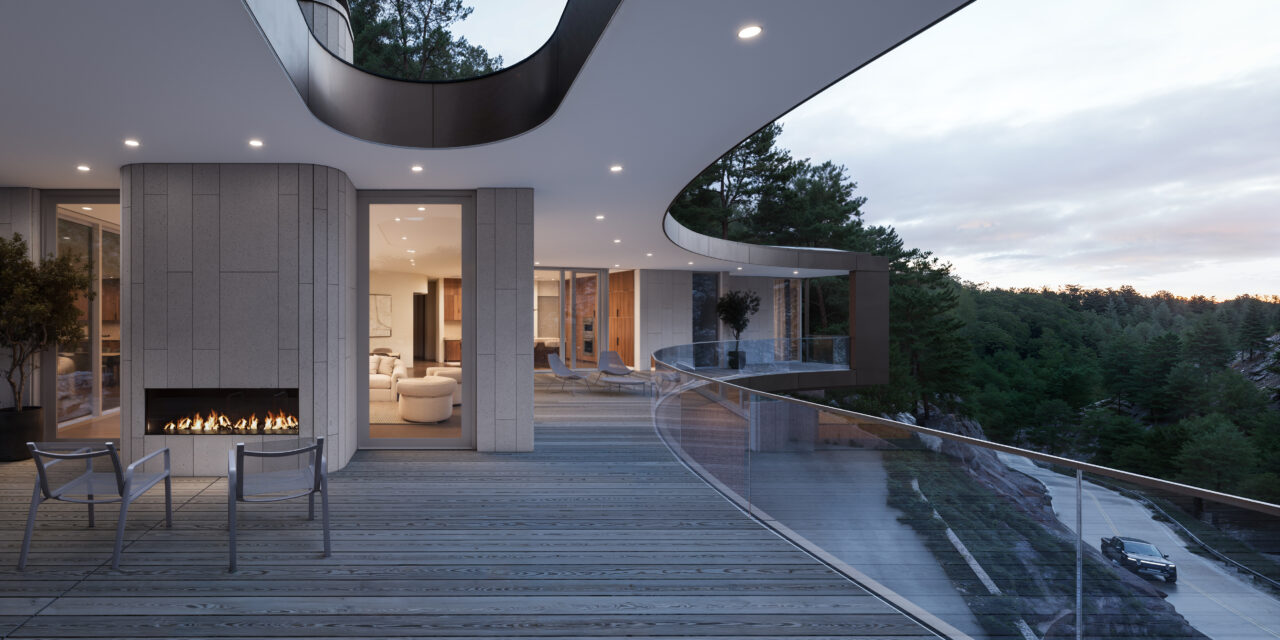
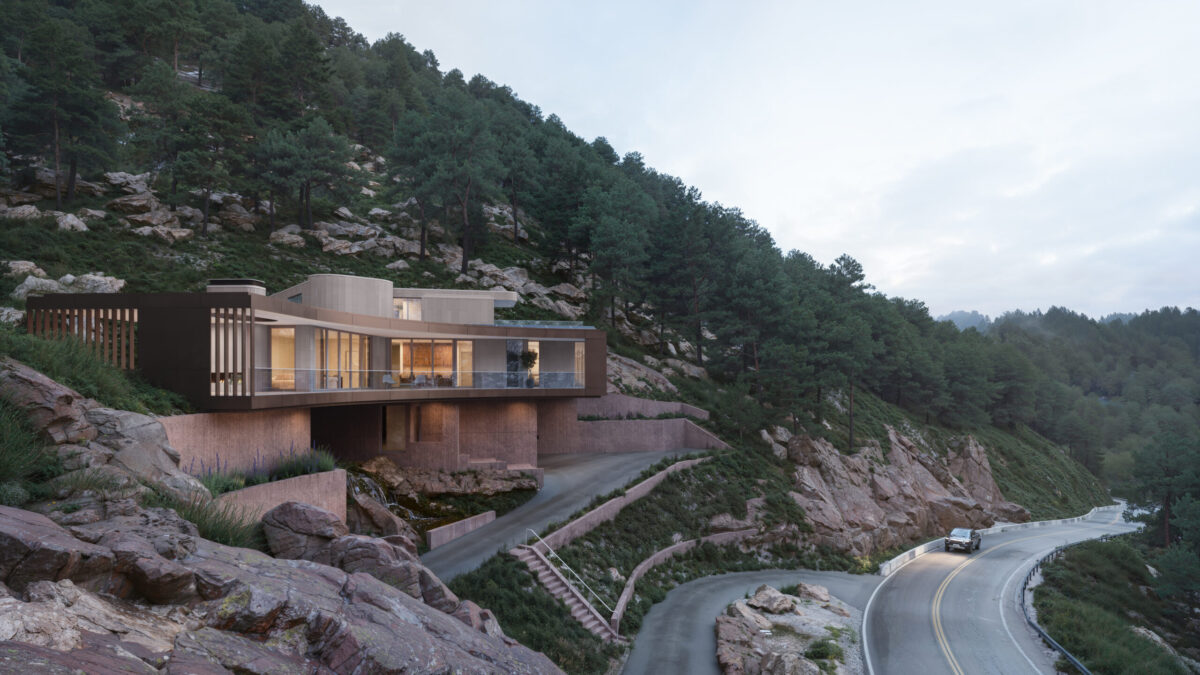
“Quite often, our commissions involve making the most of a difficult site. That could be topography, context, or contentious permitting,” says Wagoner. One example, the Linden Drive House, is in the final stages of clearing Boulder County zoning and awaits the speculative developer’s go-ahead to proceed to construction. Located along a lonely stretch of Linden Drive, the 12-acre site climbs a rocky slope in Twomile Canyon. Only a sliver of land between clumps of boulders at the base of the site is buildable. “The challenge here was to design a very dynamic home on a daunting site. Accordingly, it must meet Boulder’s zoning regulations, which cap total property square footage at 125 percent of the area homes. Here, we’ve designed a 4,600 SF custom compound that takes advantage of low spots within the topography. The design uses a bridge to straddle the ravine. From this, we derive the main living level perched above Linden Drive.”
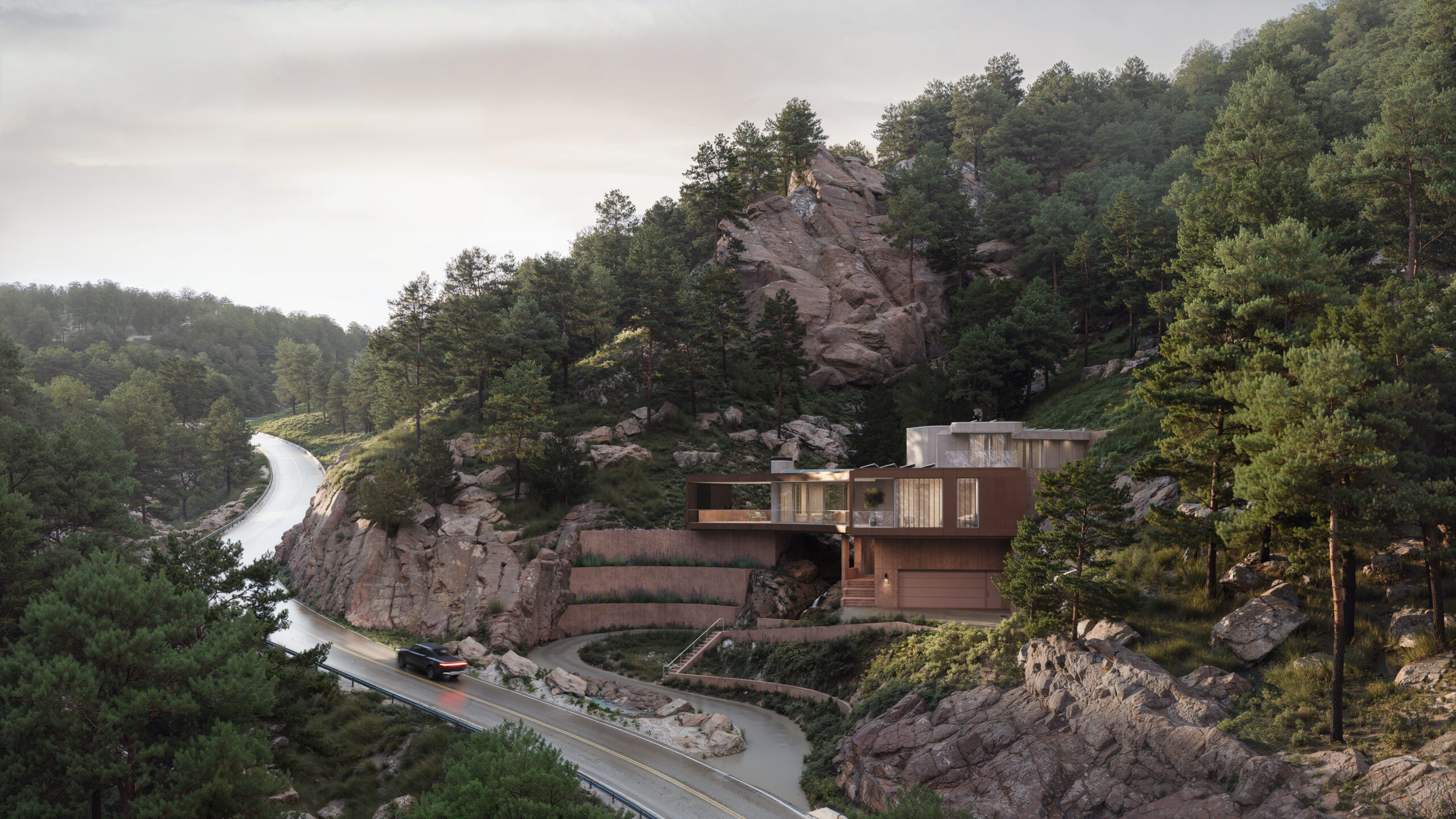
Building upward from a two-car garage at the base, the main level splays over the gorge to find purchase on a secondary plinth. The raised platform accommodates the active living area, extending out as a full frontal-facing lounge overlooking Linden Drive. Rising through the main tower, level three includes a lounge and office that opens onto a hidden poolside courtyard carved into the canyon wall behind the house.
Intent on tackling challenging situations, Wagoner’s willingness to consider commissions that feel funky right from the start is part of his mojo. Designing what no one else has is one thing; redesigning something someone else already has is another altogether.
“We have a home that will be built outside of Nederland, Colorado, which came to the studio already designed,” he shares with appropriate amusement. “The homeowners sent me a full stamped permit set done by another architect. The brief was to redesign the entire home within the approved footprint. Asking another architect for permission to redesign their work is a strange way to start a project.”
Aside from the initial awkwardness, Wagoner describes a beautiful site, stretching down Boulder Canyon, intended for a modest home rising from the hillside.
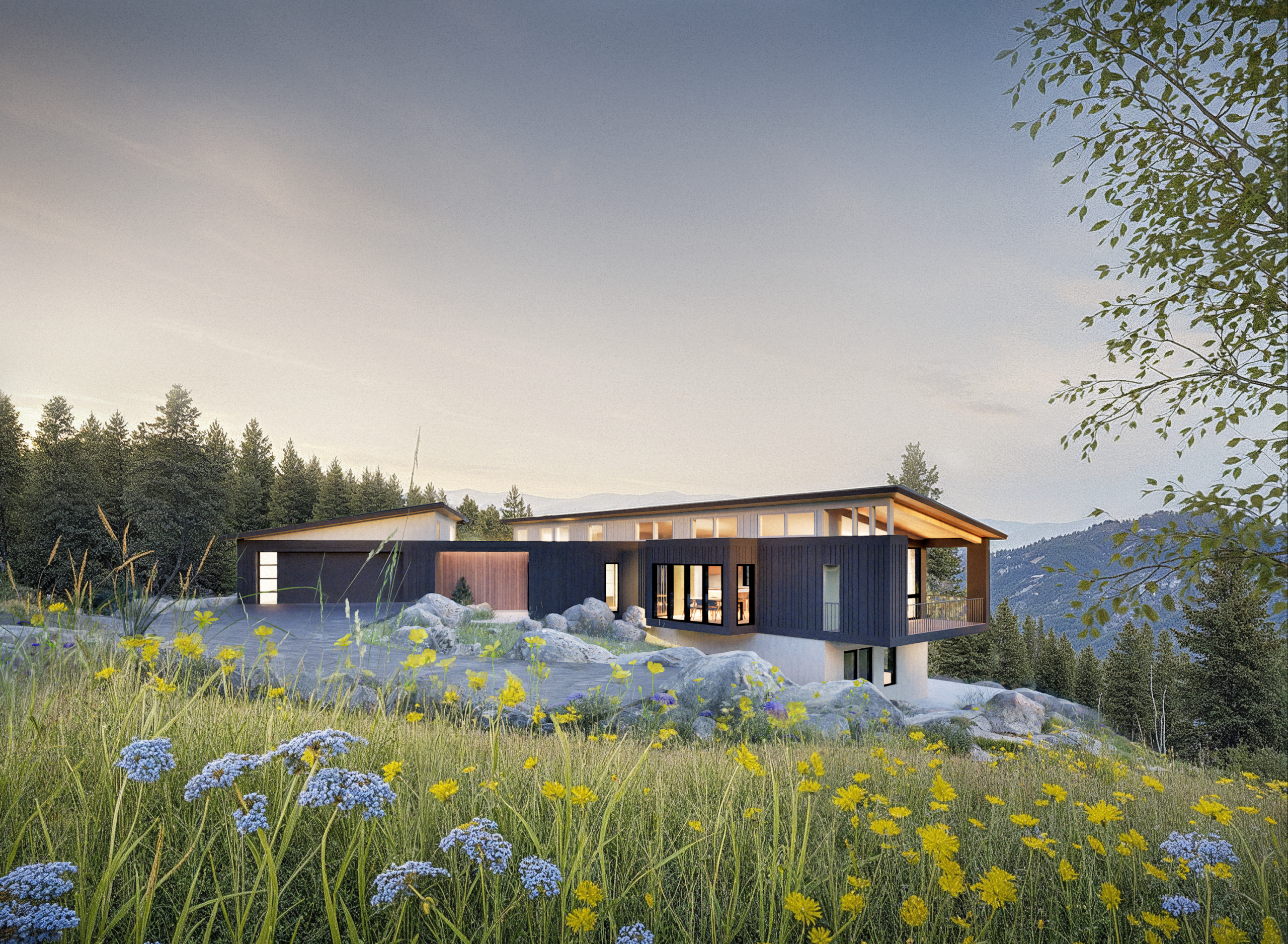
“At the Ridge Road site, we’ve specified exterior materials intent on blending the home into the landscape,” he says. “The walk-out basement base will be covered in a light grey stucco inspired by the surrounding rocks. The middle portion features a dark-bronze charcoal siding in an undulating pattern, serving as a reference to the forest. Using Hardie Board trim profiles and stacking them in different ways, we’ve added the unexpected. Above, the design dissolves the roofline into the sky, while clearstory windows daylight the interior all year long.”
While plenty of forested, mountain-top home sites remain in Colorado, Wagoner’s interest in challenging commissions isn’t confined to remote properties. A project he calls the Urban Cloister House is currently undergoing Denver’s permitting process.
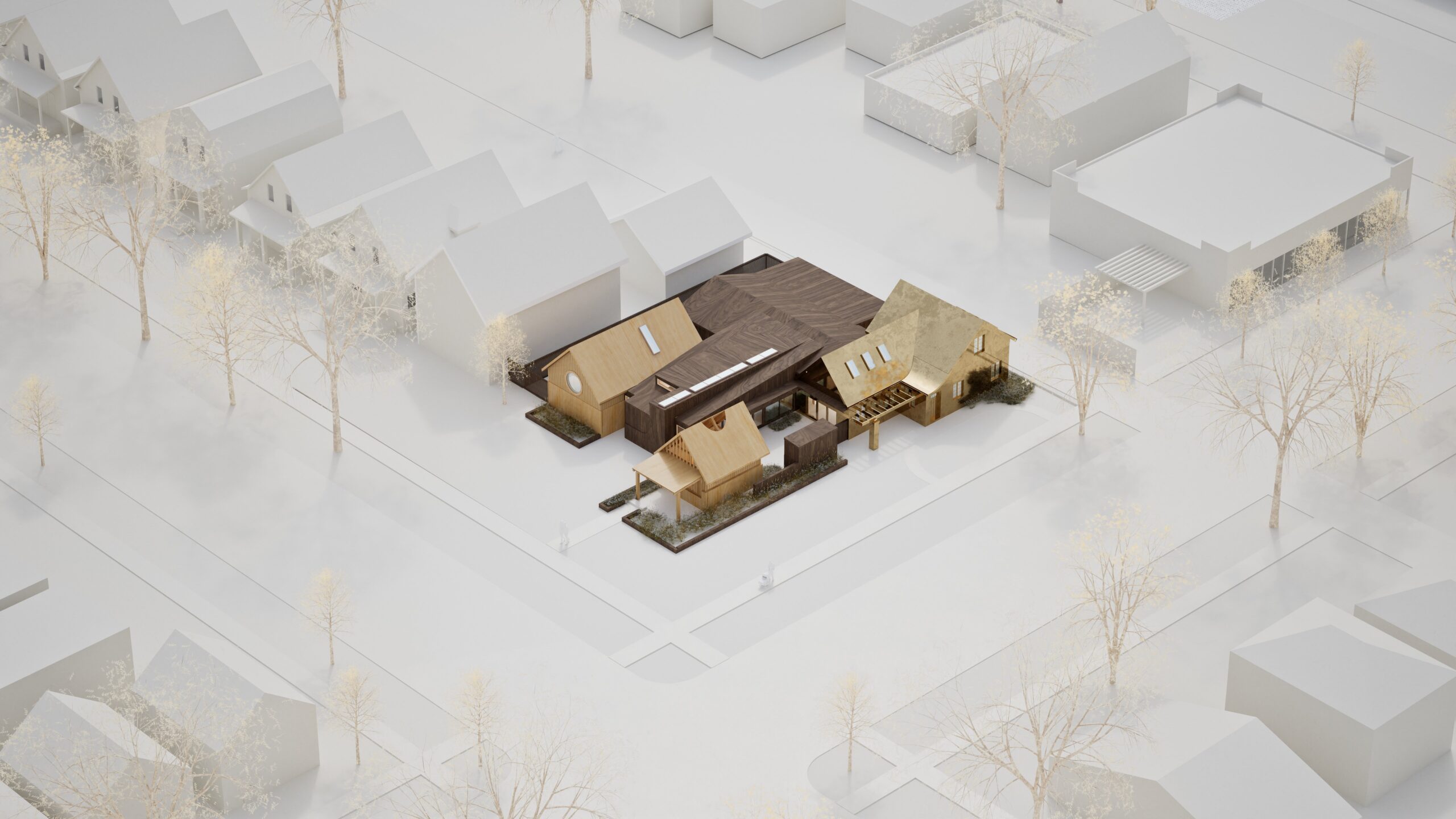
“The clients purchased a corner lot in Denver’s Whittier neighborhood, which is one of the oldest in the city. The couple is retiring and wants an urban oasis where they can age in place,” says Wagoner. The catch, of course, is they want to keep the original house, restore the exterior, replace the interior, and connect the site’s collection of secondary structures to extend the living space. “In early Denver, it was common to have the main house, a carriage house, and a third, lesser quality shed building on the property. The Urban Cloister House leverages the existing structures to create a new kind of urban abode that blends old and new elements to modernize the living experience without overwhelming the site.”
As Wagoner looks forward, it’s worth taking a moment to consider the journey so far. From designing a home-spun hot dog stand in Wichita to being named the 2024 AIA Colorado Architect of the Year, for Wagoner, the fun of problem-solving is in the context and complexity of the challenge. The way it ought to be.
“At High, Low, Buffalo, my team and I are passionate about producing surprising homes that are tailored to the lives and expectations of the occupants,” finishes Wagoner. “The joy of architecture is that each project is a unique opportunity to find something unexpected. So, we’ll keep chasing the buffalo.”