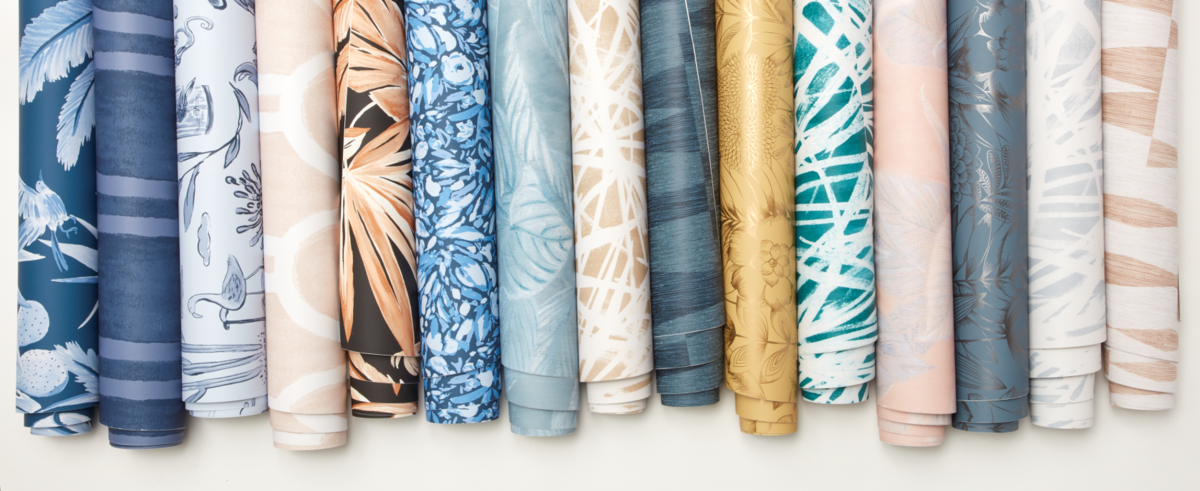
All images courtesy of Tempaper & Co.
There’s a quiet thrill in transforming a space and Tempaper & Co. simplifies that process beautifully. With peel-and-stick wallpaper that’s easy to apply and easy to remove, it brings style and comfort without the long-term commitment. Customizable patterns, textures and finishes give users the freedom to personalize a room in a way that feels both fresh and intentional with results that are nearly instant.
To learn more about how Tempaper is reshaping the way we experience wallpaper, I spoke with the company’s Founders, twin sisters Jennifer Matthews and Julia Au.

Maria: Tell me how you got started. How did your experience in set design influence your understanding of surface design and temporary applications?
Julia: It really came from a need. Working on set, we were always temporarily decorating spaces. There was one moment when we had to remove wallpaper from a set, and my aunt, who was the set decorator, said, “Wouldn’t it be helpful if wallpaper could go up easily and come down just as easily?” We realized this was something consumers could really use; something beautiful, simple to install, and removable.
Maria: Did you use the product in set design initially?
Julia: We do now! It’s in commercials, movies, events, even weddings. At the beginning, when we launched with a few patterns, we pushed it into every production company we knew. But it quickly became clear that it had broader appeal, so we expanded beyond that world. It’s exciting to see our patterns pop up on TV or in film.
Jennifer: Early on, since we came from that set design world, we understood how decorators and designers think, how they source products. We didn’t have the budget to focus on just one audience, so we said yes to everything. We hit the pavement: trade shows, word of mouth, building the website, doing our own PR. Julia and I did every part of the business ourselves for years. It shaped our vision and taught us so much along the way.
Maria: What were the biggest technical challenges in developing the product?
Jennifer: Early on, it was about finding the right partners. We needed a manufacturer who could work with us to develop an adhesive that would stick well over time but also remove cleanly. That took trial and error, but once we got it right, we were fortunate to connect with excellent wallpaper printers who understood the traditional techniques like copper plate engraving.
We wanted the product to have the integrity of classic wallpaper with texture, metallics, and high-quality print but make it accessible, stocked and easy to use. That’s what really shook up the industry.
Looking back, even though it took about a year and a half of testing, the technical side might have been the easiest part. We didn’t even realize how lucky we were at the time. The adhesive had to be strong, but not too strong. And because it’s vinyl-coated, it performs well in highly humid environments, so bathrooms became a huge part of the market. Still today, people ask, “Can I use it in a powder room?”
Maria: Was there anything that felt like a real struggle?
Jennifer: Everything else!
Julia: Definitely. We built the company from the ground up, using our own savings. No venture capital. No big cash infusion. So, every step was organic. As manufacturers, we had to invest in inventory before the sales came in, which was a big risk. The real challenge was reaching that turning point where revenue could support growth, hiring and sustainable cash flow. But once we got there, it was incredible to see what we could build. And how far we could push the boundaries of what wallpaper could be.
Maria: Let’s talk about customization and the future of personalized design. I imagine that must be a huge undertaking: logistically and technically.
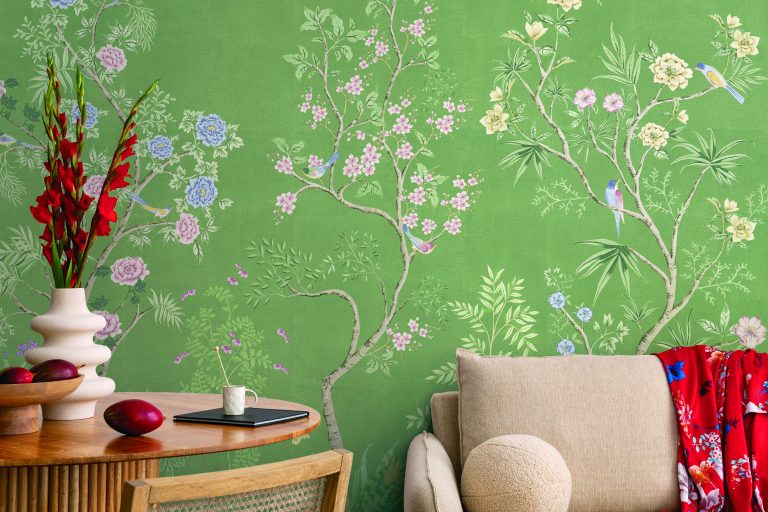
Jennifer: It is and it’s becoming a major area of growth for us. We’ve been offering custom wallpaper for a while now, but demand is really increasing. We now have our own in-house digital printers, and we also work with outside partners. It’s required serious investment and it’s expanding.
Julia: And we’re taking it to the next level. We’re working on a project that will allow customers to not only customize patterns but also choose the substrate. So, whether someone needs a Type II commercial-grade paper for a hotel, peel-and-stick for a bathroom, or traditional unpasted wallpaper they’ll be able to select the format that suits their project.
We’re starting with our custom offerings and hope to launch this on our site by the Fall. It’s a big step toward making personalization more flexible and accessible.
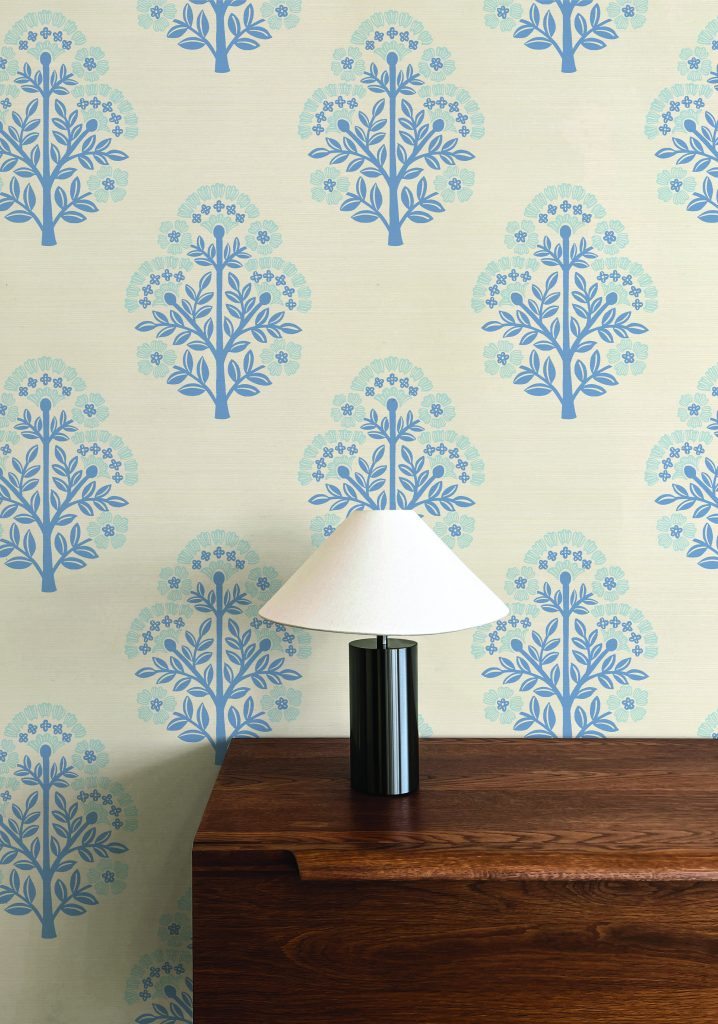
Maria: I think you really hit the nail on the head with “scale.” That’s the hardest thing for people to imagine, looking at a small image on a screen and trying to imagine how it will feel in an actual space. What role do you see digital tools playing in professional design workflows? Are there new tools that could help designers streamline their process?
Jennifer: Definitely. The ability to design something and instantly visualize color, scale and style would be a huge asset. Right now, with customization, there’s still a lot of back-and-forth between the designer and client. But imagine if you could cut that out – design it, see it, and then tweak it instantly.
Maria: Let’s talk about grasscloth. I love that it’s having a resurgence; it’s such a classic texture that works in almost any space. Why do you think it’s becoming popular again?
Julia: Grasscloth is timeless. That’s why you always see it come back around. We launched two collections and both performed extremely well and that success made it clear there was room to bring in authentic, natural grasscloth.
Designers love it. Homeowners love it. It instantly enhances a room.
We’ve seen interiors saturated with bold color for a long time, but now there’s a shift. People are gravitating toward neutrals and embracing the texture and calmness they bring. Home has become a sanctuary; a place to disconnect from the chaos outside. Grasscloth supports that feeling. It’s tactile, warm and grounding.
Maria: Are the grasscloth you offer made from natural fibers?
Jennifer: Actually we offer both authentic, natural ones that require paste and traditional installation and we also have a faux peel-and-stick version, where we raise the ink to mimic the woven texture. It gives you the tactile feel and visual look of grasscloth, but on a vinyl surface so it’s suitable for high-moisture areas like bathrooms, where natural grasscloth isn’t recommended.
Maria: Let’s end with your approach to sustainability and responsible design.
Julia: Sustainability has been a focus from the beginning. While our vinyl-coated product has limitations, we’ve worked to make it as clean as possible phthalate-free, low VOC, water-based adhesives, and all made in the U.S. We meet strict safety standards and avoid the strong chemical odors found in some imports. It’s always been important to us that our wallpaper is safe enough for nurseries and bedrooms.
Jennifer: We’re also looking at what happens after use: can it be recycled, and how do we support that? We’re introducing more sustainable materials like grasscloth and cork. For us, it’s not just about production – it’s about responsibility at every stage.
Julia: Our ink specialists mix colors by hand for every print run, which is why wallpaper has lot numbers; there are always slight variations. It’s the same with authentic grasscloth, each batch is unique in color and texture. We embrace those imperfections as part of the beauty, but we always advise customers to save their labels if they plan to reorder. It’s an artisanal process, and that natural variation is what makes it special.