Photo: Kitta Studio
Japan. The country that brought us high-speed rail, industrial robotics, the Walkman, QR codes, toilets that greet you with heated seats and ambient music. A nation where convenience stores operate with clockwork precision and robots serve ramen. Yet when it comes to residential smart home integration, the kind of sophisticated, whole-home automation that system integrators in the U.S., UK, Europe and beyond have been installing for decades, Japan remains surprisingly, stubbornly behind the times.
After moving to Japan in 2025, I discovered this paradox firsthand. During our home remodel I was surprised and frustrated trying to explain to our builder why I wanted an electrical outlet mounted behind where the television would hang. The concept of hiding cables seemed to genuinely perplex him. If this was my experience with something as simple as outlet placement, what challenges awaited integrators trying to bring home automation to Japanese residential projects? That’s how I found Dan Nicklin of Smart Homes Japan, operating from Hokkaido and one of the few true luxury residential integration companies in the entire country.

Dan is originally from the UK, where he studied mechanical engineering and worked for Denso, a Japanese automotive supplier based in Nagoya. He first came to Japan in 2017 for ten months on the Denso graduate program. As Dan says, “I was blown away. And I still am. It’s amazing.”
After the program he went back to the UK but quickly knew he needed to return to Japan. So, in 2019, he took a sabbatical and returned in time to see the Rugby World Cup, including England in the final, and stayed for ski season. Then in 2020 COVID hit. Dan had the option to stay in Japan where things were pretty open or go back to the UK where everything was locking down. Being in Japan let him consider what he truly wanted; either go back and get another job or stay and start a business. He chose to stay.
Bill: So, what led you from automotive engineering to smart homes?
Dan: During COVID, I got into property maintenance and management. I was living at Lake Tōya in Hokkaido, managing properties about 45 minutes away in the Rusutsu ski resort. We’d check on them during winter; is the heating on, has there been a water leak, simple routine things. That got me thinking that there must be a better way. For example, let’s put temperature sensors next to the boiler and know if the heating system is working without driving out there.
At one lake house, we had a 5,000-liter underground kerosene tank with just an analog gauge. I wired up an Arduino and put it on the internet so we could check the tank level from an app. I thought, this is just one problem, there must be other people having the same and/or different problems.
Bill: What project really launched the business?
Dan: A friend said, “I think I have the perfect first customer for you.” It was this huge guest chalet called Seasons Residence in Niseko-Annupuri. The owner was looking to upgrade everything; home cinema, multi-room audio, network and Wi-Fi. The house was about seven years old and they’d always had issues. The home cinema was a perfect example. Only two or three people on staff knew how to turn it on. They had written instructions: use this remote to turn on this device, then the projector, change it to this setting. There’s definitely a better way than that.
That led me to research smart home systems. I looked at Control4, Crestron and Savant. Control4 had the most information available online, including YouTube and Instagram. It was easy to find integrators in the UK. They recommended the training course and becoming an authorized dealer. So, I became the first authorized dealer in Japan. When I did it, I was amazed. How has no one ever done this here before?
Bill: What were the biggest surprises about why this market isn’t more developed?
Dan: Things you would think are common sense, like putting an outlet behind a TV so cables don’t hang down, just aren’t done here. I’ve had experiences where I ask for an outlet with network connections, and the electrician didn’t put the proper socket in the wall. They just put a circular piece of plastic with the cable sticking out. OK, technically it works, but it’s not the right way. These products exist. They’re made by Japanese companies like Panasonic. I don’t know why they weren’t being used.
In the UK, it seems like almost anything can be integrated — Sky TV, heating, Tesla. Everything has an integration. In Japan, those integrations don’t exist. Or if you want to integrate something, you have to find a DIY version because manufacturers don’t support it. A lot of equipment in the UK — heat pumps, air conditioning — are Japanese brands like Mitsubishi and Toshiba. Those are integrated into smart homes in the UK, but not here.

Bill: Describe working with architects and builders here.
Dan: The easiest way is working with architects. Generally, the architects here oversee almost the whole project. Some are almost project managers with direct contact with the owner. There have been projects where we haven’t spoken to the owner at all, just through architects. But ideally, we need to talk to the owner directly because smart home systems are very personal — how do you like this light setting, where do you want the TV, what size? Things the architect isn’t thinking about need homeowner input and approval.
In Japan, relationships are hierarchical. If an architect or homeowner demands a system, the general contractor has no option but to support it. If it’s coming from the top, they have to find a way. If we’re working alongside the contractor, sometimes it’s difficult. We have to make very detailed drawings and go through many meetings to explain what we’re trying to achieve.
The biggest thing is giving them the end goal — this is what the result will be, this is what we want, this is how we’ll achieve it. We work backwards from that.
Bill: What about customer expectations versus what can be delivered?
Dan: Most of my customers are from overseas with reasonable expectations. They get surprised when the architect or general contractor says, “No, it’s not available, can’t be done in Japan.”
You end up with conflict between customer requirements and what can be done, trying to make a compromise. There are things that can’t be done here for almost silly reasons. Maybe it’s just not done. Sourcing materials is extremely difficult. Very basic materials are sometimes difficult to find, or expensive. Finding competent contractors is challenging.
People ask for heating systems and lighting systems to be integrated, then complain the system is expensive. It’s expensive because not many people are doing it. There aren’t many competitors bringing these systems to market. Lutron is already expensive, a luxury product at the top of the market. But for them to bring it to Japan, they’ve had to pay for certification. That adds up alongside very small current demand.
Even typical construction costs in Niseko where we do lots of work are very expensive. There’s a huge demand and not enough supply of contractors and materials, so they’re bumping prices up. That makes it difficult to sell a smart home. I’m struggling with trying to convince architects or homeowners of the benefit — that the operating cost savings and increased comfort are worth the additional up-front cost.
Bill: But once they experience it, they understand?
Dan: Yes, but we might get involved too late and they finish the house, half the systems don’t work, and nothing’s integrated. Now they wish they’d gone with the smart home. But at that point construction is finished. Once the house is built, we can’t easily turn it into smart lighting. Those systems don’t exist here. We’d have to rewire the whole house.
Properties around Niseko are almost small hotels because of the size and equipment they have. They’ve got huge heating systems, underfloor heating, air conditioning, an onsen (Japanese hot spring) or heated pool or hot tub. But all of these are individual and must be turned on and off by push buttons on the wall.
You might end up with one hallway with five light switches, your air conditioning control panel, heating control panel, underfloor heating, and an intercom system. It looks like acne on the wall. You’ve got this beautiful house with really nice finishes — wood, teak — and then all these control panels.
Bill: That’s exactly my house. We walked in and there were four panels on the wall, three dedicated to just heating the floor.
Dan: It’s often done that way. Also frustrating with heating systems — it might just be a dial from one to seven, and you try to pick what setting. My room is a 2.5 today. As soon as the sun comes up, you’ve got to turn the heating down. There’s very little adjustment based on actual air temperature. No feedback.
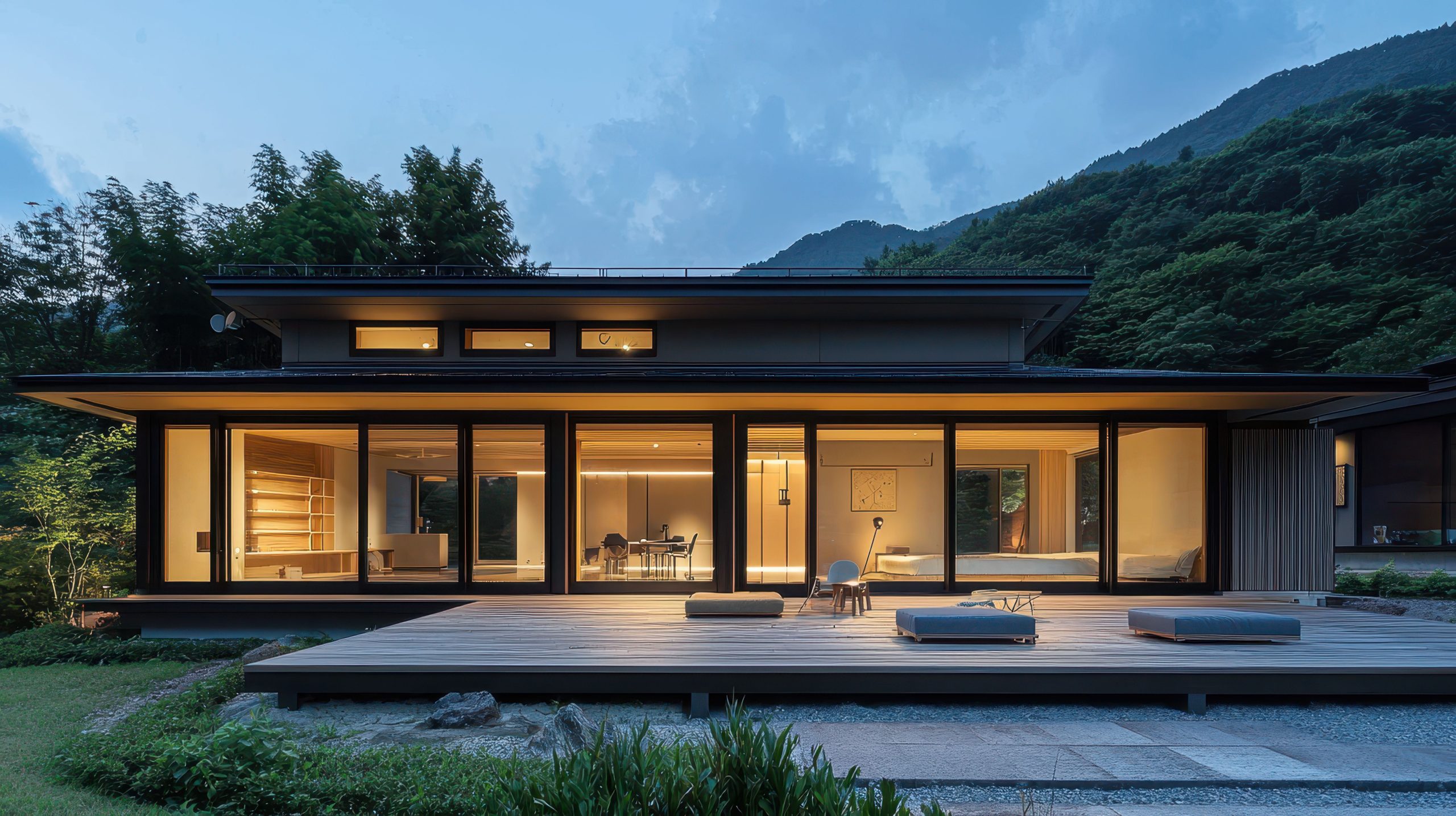
Photo: Kitta Studio
Bill: Tell me about Lutron HomeWorks launching in Japan.
Dan: Lutron HomeWorks was only released in Japan in 2025, and we managed to get the first system. We’re finishing the installation this week. It’s been available in America for years. But because of certification and proving there’s a market here, it’s taken longer to get it into Japan.
Bill: What’s your philosophy that you’re trying to bring to every project?
Dan: Always believing there’s a better or alternative way of doing things. Coming to Japan especially, they say, “This is the way we’ve always done it.” Why not challenge that? There’s an alternative way of thinking. Maybe the outcome will be better or different. There might be a chance to improve efficiency or comfort or convenience.
It’s not just about smart systems and equipment. It’s about delivering a customer-focused experience on every project. Challenging the current approach, aligning closely with the customer, understanding exact needs, and tailoring our solution. Making smart living effortless.
The Road Ahead
As Dan and I wrapped up our conversation, I couldn’t help but reflect on the irony. Japan, a country that pioneers robotics, miniaturization and consumer electronics, is somehow behind in residential automation and integration. Dan’s story illustrates that obstacles to smart home adoption aren’t always technical; they’re cultural, procedural and educational. Breaking through those barriers requires persistence, creativity and a willingness to question why things have always been done in a certain way.
Japan may lag in smart home adoption, but Dan Nicklin isn’t waiting for the market to catch up. He’s too busy creating it.