Photos: Adobe
A few Summers ago, electrical engineer Scott Lind was walking outside with a group of German students visiting his home in Wisconsin. They moved away from the lights of the house until the artificial glow faded behind them. One of the students stared upward for a long moment before asking a quiet question. “Is that a weird-looking cloud?”
It wasn’t a cloud. It was the Milky Way. The student had simply never seen it before.
It wasn’t an isolated moment. Lind has asked around. A lot of people have never seen the Milky Way. Or if they have, they had to travel a long, long distance to find it.
For most of human history that would have been unimaginable. The night sky was something everyone experienced simply by stepping outside after sunset. Entire mythologies were written in the stars. Sailors navigated by them. Farmers tracked seasons by them.
Today, most people living in developed areas have never seen that sky. Not because the stars disappeared. But because our lighting did its job a little too well.

Outdoor lighting has become one of the quiet success stories of modern design. Homes glow beautifully after sunset. Landscapes remain usable well into the evening. Walkways feel safer. Outdoor living spaces stretch comfortably into the night. In luxury residential environments especially, lighting has become a carefully considered architectural layer grazing stone walls, revealing specimen trees, highlighting water features, and extending the experience of the home well beyond its interior walls.
But somewhere along the way, lighting design developed a blind spot. No one was really paying attention to where the light went after it left the fixture. And a surprising amount of it goes straight into the sky.
Not intentionally, of course. But poorly shielded fixtures, excessive brightness, and cooler color temperatures scatter light upward into the atmosphere where it reflects off particles and creates the familiar dome of glow hovering above cities. That glow has a name now: skyglow. Once you notice it, it becomes difficult to ignore. And according to ground-based research, night sky brightness has been increasing at nearly 10 percent per year for the past decade.
“Dark sky lighting isn’t about eliminating lighting,” Scott Lind explains. “It’s about optimizing it so it performs the function that’s intended but minimizes all the negative impacts that artificial light can have when it’s used poorly.”
Or put another way: light the ground, not the sky.
The Sky as Property Amenity
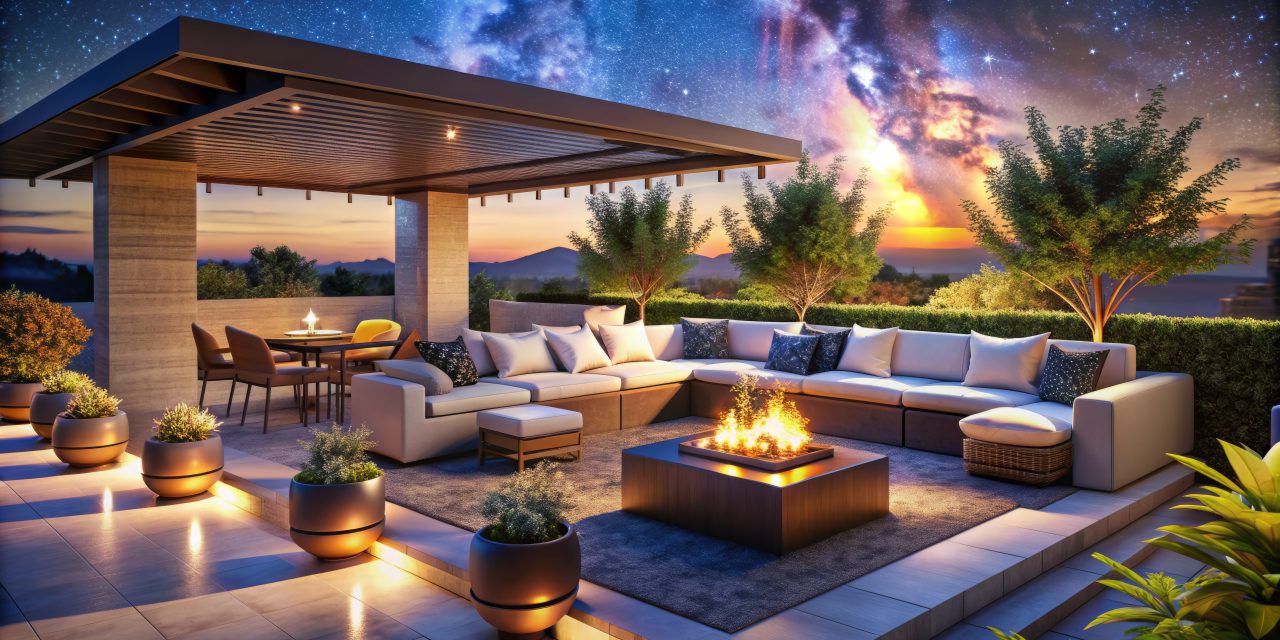
For designers working in luxury residential environments, this realization is beginning to reshape how outdoor lighting is approached. When lighting is warmer, lower in intensity, and carefully directed, something unexpected happens. The stars begin to return. And suddenly the night sky becomes part of the property itself.
Ask Lind why it matters and his answer is immediate — and personal. Before he knew anything about the habitat research or the science of light pollution, his motivation was simpler. “The first reason I was motivated to work on dark sky was awe,” he says. “That is obviously a key thing for all the readers in your magazine. They create awe by creating these spaces. But when we lose the night sky, we lose the one experience that I think is the most awe-inspiring available to any human being — standing under a truly dark sky and seeing the Milky Way. Every human used to have that experience on a regular basis. And most of us, without ever making a conscious choice to give it up, no longer do.”
He’s also been reading the science behind that feeling. Recent research on the psychology of awe suggests the experience measurably shifts human behavior, reducing self-centeredness, increasing willingness to help others, and changing a person’s sense of their place in the world. It is not a small thing to lose.
That shift matters more than it might initially appear. People buy luxury homes for their surroundings. The ocean view, the mountain ridgeline, the desert horizon, the vineyard valley. Designers spend enormous effort framing those views during the day, carefully positioning windows, terraces and sightlines to capture them.
But those landscapes do not disappear after sunset. In fact, they often become something even more remarkable.
A home in Jackson Hole, Big Sky, Napa Valley, or coastal Maine is surrounded not only by scenery but by an enormous, dark sky. In many urban environments that sky has already been erased by ambient glow. In rural and semi-rural locations it remains one of the most powerful natural experiences available, and increasingly, one of the most sought after.
Across the world, destinations with exceptionally dark skies are becoming magnets for visitors. National parks, remote desert landscapes, and rural regions are being designated as International Dark Sky Parks and Communities, a certification awarded by DarkSky International to places that actively protect the natural night environment. The trend has given rise to what travel writers now call astrotourism: trips planned specifically around experiencing the night sky. Resorts in places like Utah, New Zealand and Northern Canada now advertise stargazing experiences alongside spa treatments and guided hikes. Some properties build observatories or design outdoor lounges specifically oriented toward the stars.
For designers working in residential environments, the implication is clear: the night sky is becoming part of the value proposition. Good outdoor lighting doesn’t compete with that experience. It frames it.
What the Data Actually Shows
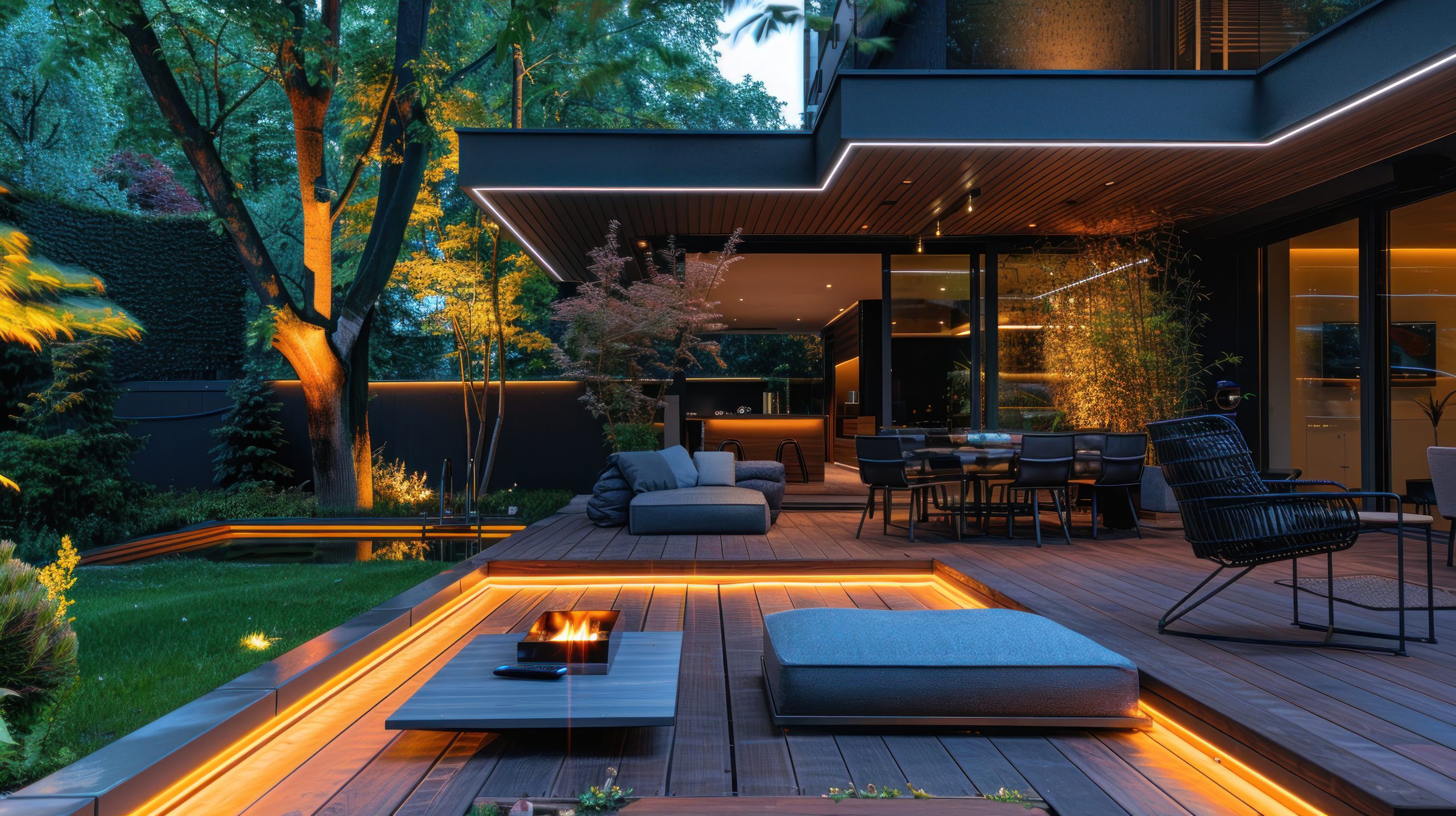
One of the biggest surprises in this conversation is how dramatically color temperature affects the sky itself. In controlled testing conducted by Scott Lind and security consultant Chris Wilson of MxV Consulting — originally designed to evaluate LED lighting performance for security cameras, conducted at a farm in Ohio on a bitterly cold winter night — the researchers compared identical LED chips at equal lumen output across seven color temperatures. Warmer 1800K (Kelvin) LED lighting produced a skyglow index of 103. Cooler 5000K lighting reached 365. That’s more than three and a half times the atmospheric impact from the same amount of light. The brightness was identical. The blue-rich light simply scattered far more aggressively in the atmosphere.
The skyglow finding wasn’t what they came for. The study was built around a practical security question: which LED color temperatures allow cameras to perform best at night? What Lind and Wilson discovered along the way — that the same warm, low-CCT lighting that helps cameras also dramatically reduces atmospheric scatter — surprised even them. As they noted in publishing their findings, best-practice lighting for security turned out to be best-practice lighting for the sky, for human eye adaptation, and for the birds, insects and other species affected by artificial light at night. One decision. Multiple benefits.
That connection is not lost on the security industry. One of the most common mistakes Lind encounters is security consultants pushing for 4000K or higher under the mistaken belief that cameras require it. The testing showed the opposite: cameras performed best at 2700K and performed well even under 1800K with properly configured white balance settings. Specifying cooler light for security purposes isn’t just unnecessary. It actively makes the problem worse.
That convergence is not lost on Wilson either, who now recommends that professionals never specify above 3000K for outdoor environments, and target 2200K as the optimal choice for most exterior applications. For designers, this means a relatively straightforward specification choice carries an outsized effect. Choosing warmer color temperatures doesn’t simply change how a project looks. It changes how the sky above it behaves.
More Light Is Not Always Better Light
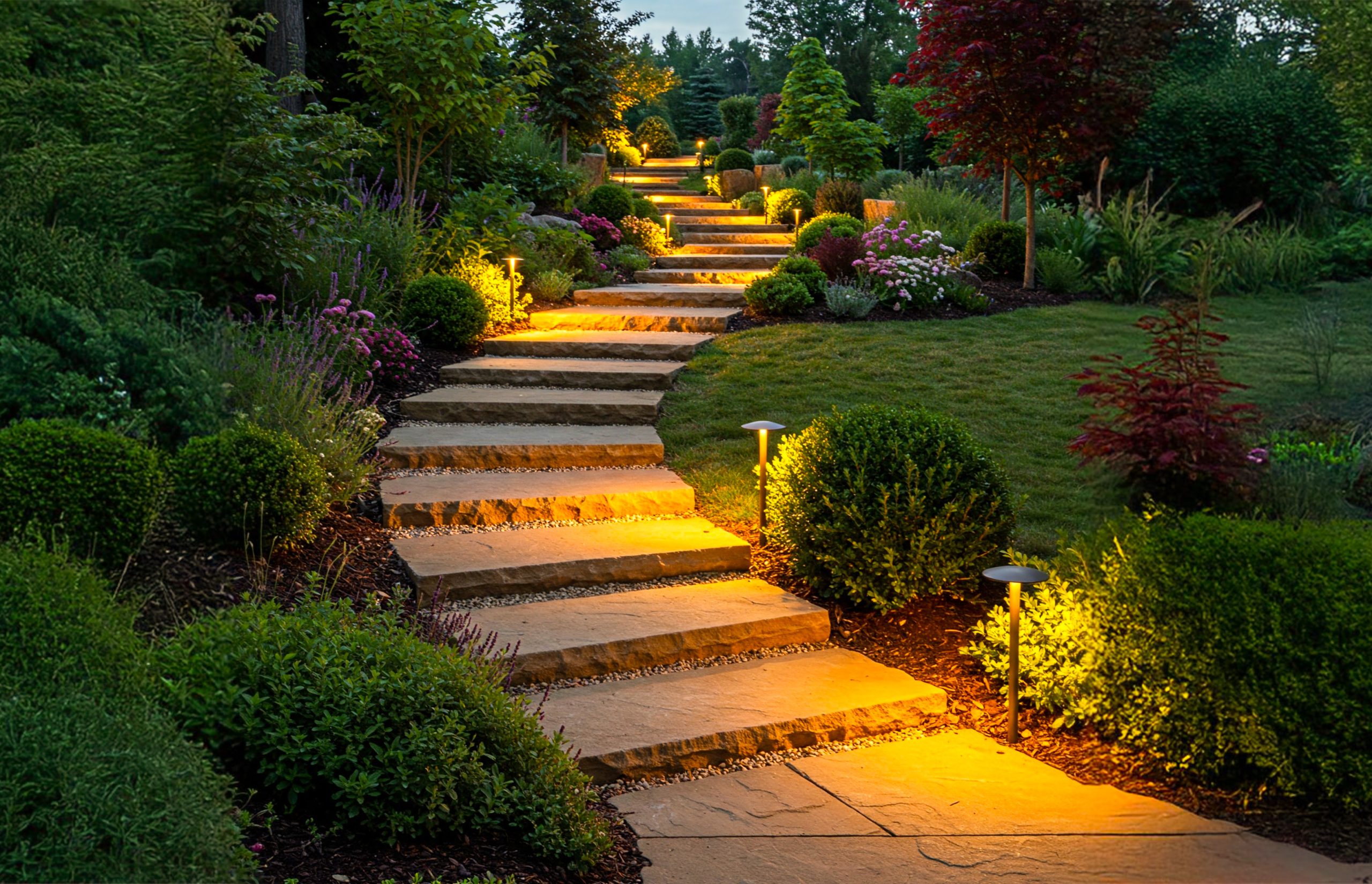
Another surprise is that many outdoor lighting systems simply use far more light than necessary. The widespread adoption of LED technology made it easy and inexpensive to produce enormous brightness, and many exterior environments now resemble operating rooms when a comfortable evening glow would do.
“The quantity is critical,” Lind says. “That is a one-to-one relationship. When you double the amount of light, you double the impact. That’s a direct relationship. And in almost every application I’ve ever seen, we use too much of it.”
Yet brighter lighting does not always create better spaces. Research consistently shows that uniform, well-controlled lighting often makes environments feel safer than excessively bright installations that produce glare and harsh contrast. In those conditions the eye struggles to adapt, and visibility can actually decline. As Lind puts it, the goal is to be as uniform as possible with just enough contrast to detect objects or create the drama you need — while keeping the absolute light level as low as possible.
For designers, this realization is liberating. Good lighting design is not about flooding every surface with light. It is about placing illumination exactly where it belongs and allowing darkness to do some of the work.
From Astronomy Movement to Design Standard
Organizations like DarkSky International have spent decades studying how artificial light affects both ecosystems and human environments. Their guidelines are surprisingly straightforward: outdoor lighting should be useful, carefully targeted, low in intensity, controlled so it operates only when needed, and warm in color temperature.
Those ideas are no longer confined to astronomy enthusiasts or conservation groups. They are slowly finding their way into building standards and sustainability frameworks. Dark sky considerations now appear in programs like LEED and WELL, and entire municipalities are adopting lighting ordinances designed to preserve the nighttime environment. Lind points to the Illuminating Engineering Society’s recently revised recommended practice document, RP-43, updated in 2025, as the clearest first step available to any design professional. “Don’t just go rule of thumb,” he says. “Don’t just do what you did before. Look at the new standard and integrate that into your design.” He estimates that if the industry simply followed that standard, light pollution could be reduced by as much as 75 percent.
What began as an astronomy movement has quietly become a design conversation. And increasingly, that conversation is reaching architects, lighting designers, and technology integrators working in residential environments.
Technology Finally Catches Up
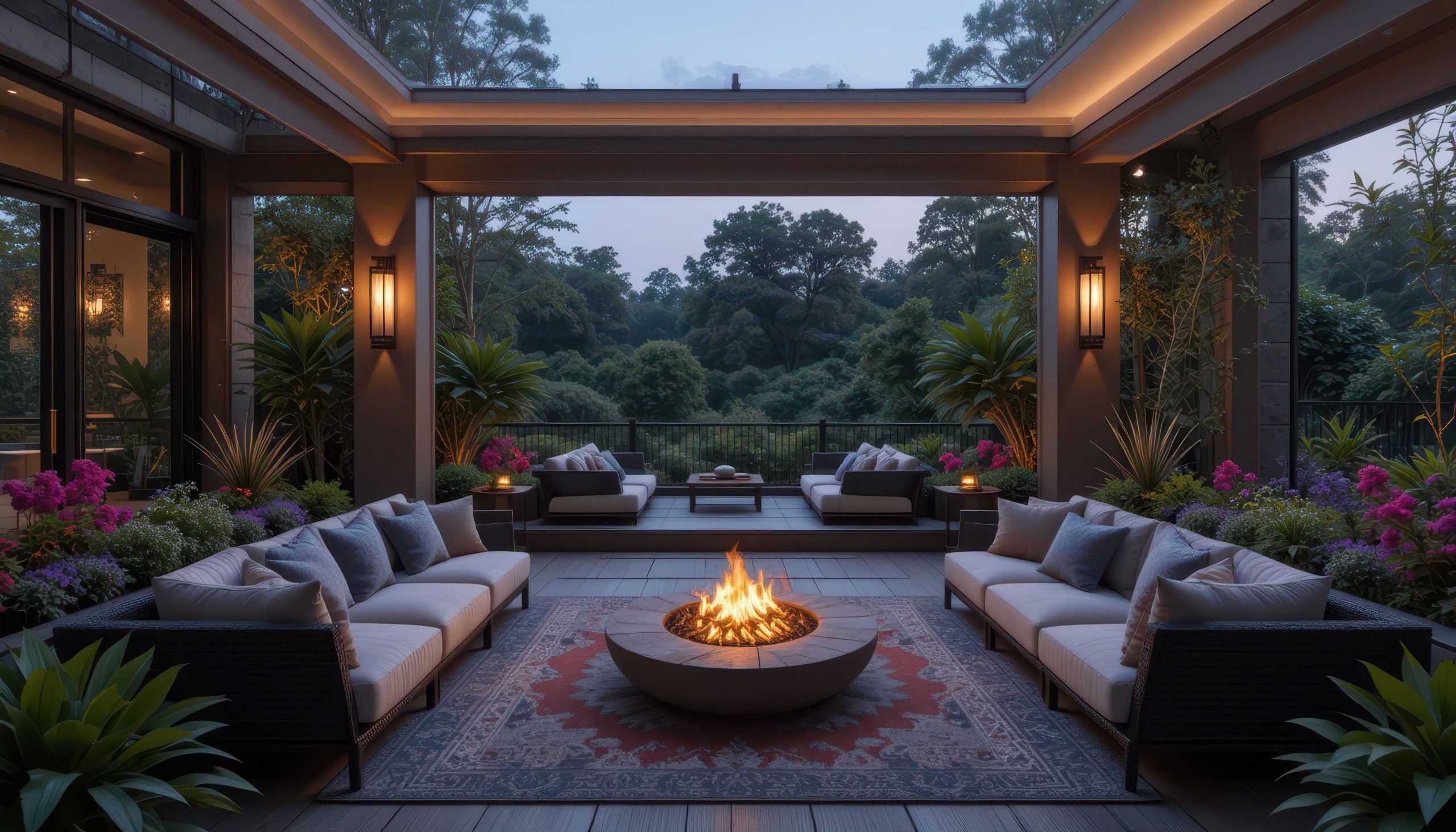
One reason is that the tools have finally matched the philosophy. The same smart lighting systems that allow homeowners to create layered interior scenes are now making it possible to manage exterior lighting with far more precision than a simple on–off switch ever allowed. Exterior fixtures can dim gradually as the evening progresses. Path lighting can activate only when someone approaches. Landscape lighting can soften after midnight while still maintaining safety and visibility.
“Control systems are a huge part of this,” Lind says. “The ability to control color temperature now with fixtures is a huge part of this. Turning things off, turning things down. In addition to choosing the fixtures themselves, choosing the light sources that can have the minimal impact to begin with. It’s a combination of all those things.”
For technology integrators, that translates directly to how a system is programmed. Specifying warmer color temperatures is only part of the equation. Dimming schedules that reduce output as the evening progresses, occupancy-based triggers that activate path lighting only when someone is present, and automated shutoff after a set hour all work together to let a property behave responsibly after dark. The fixture choice and the control logic are inseparable. One without the other leaves most of the benefits on the table.
And the timing matters. “Two years ago, you didn’t have the tools,” Lind notes. “Now there’s no excuse.” LED technology has expanded dramatically at the lower end of the color temperature range — 2200K and 1800K fixtures are now available from major manufacturers, and phosphor-converted amber is an option for projects where minimizing impact is the highest priority.
Instead of flooding a property with light from dusk until dawn, designers can now treat outdoor illumination as something that evolves throughout the night. In practice, that means a home can glow warmly during an evening gathering, then slowly settle into a quieter nighttime presence — preserving the landscape, conserving energy, and allowing the sky above the property to remain visible.
The Ceiling Everyone Forgot
There is a philosophical shift happening beneath the technical details. Architects spend enormous time designing ceilings inside buildings; coffered ceilings, vaulted ceilings, sculptural lighting, skylights that shape how daylight enters a room.
Outside, however, the largest ceiling in any project, the night sky, has traditionally been ignored. For decades outdoor lighting treated the sky as empty space. In reality, it may be the most emotionally powerful design element in the entire environment. Once designers begin thinking about it that way, lighting decisions naturally change. Fixtures become more intentional. Light levels become calmer and more focused. Landscapes stand out more clearly against the surrounding darkness.
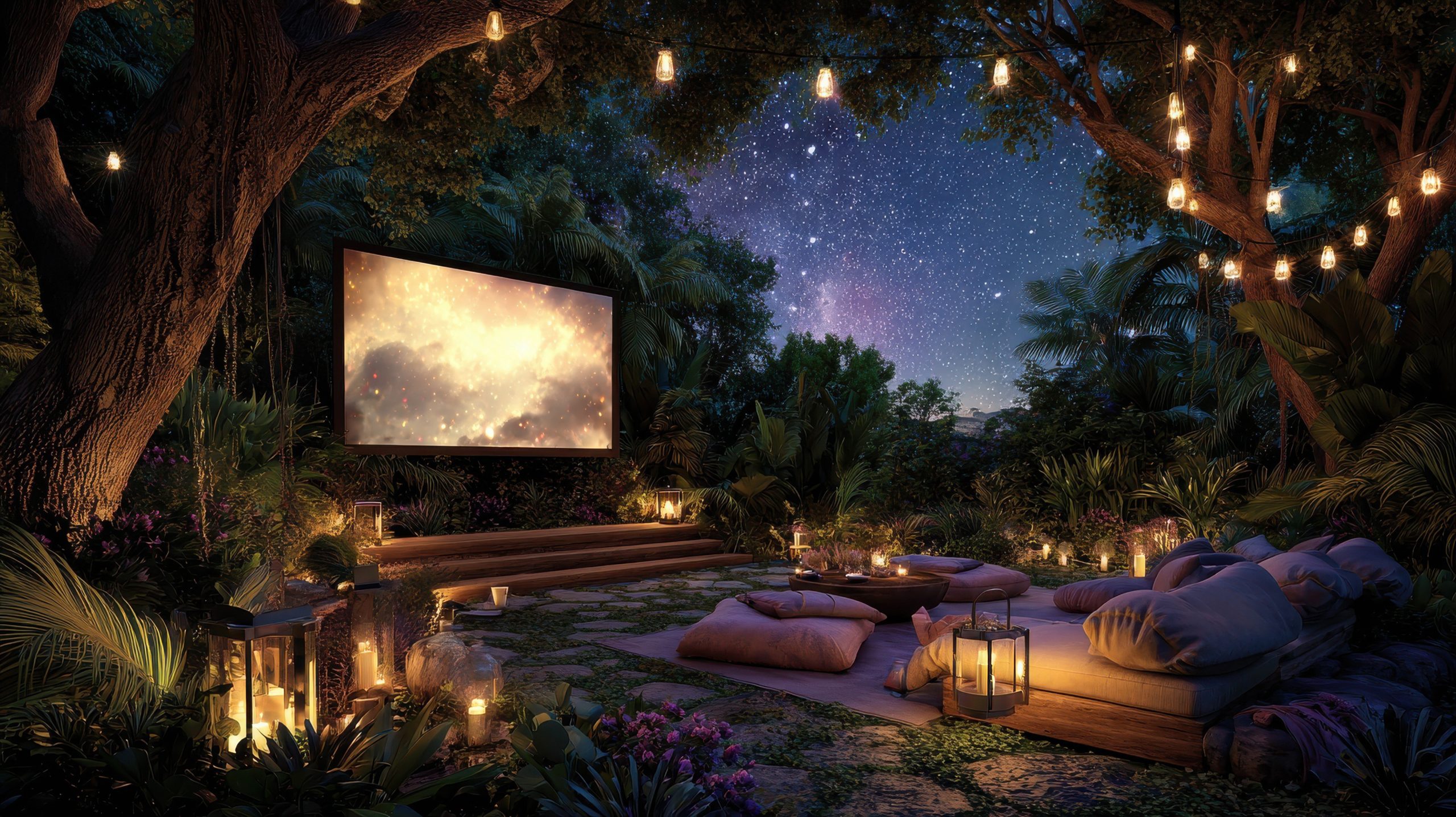
The architecture still shines. The landscape still glows. And above it all, the stars come back.
Skyglow data sourced from “Light the Night – the Impact of LED Lighting on Species, Safety, and Security,” by Scott Lind and Chris Wilson, MxV Consulting, March 2025.