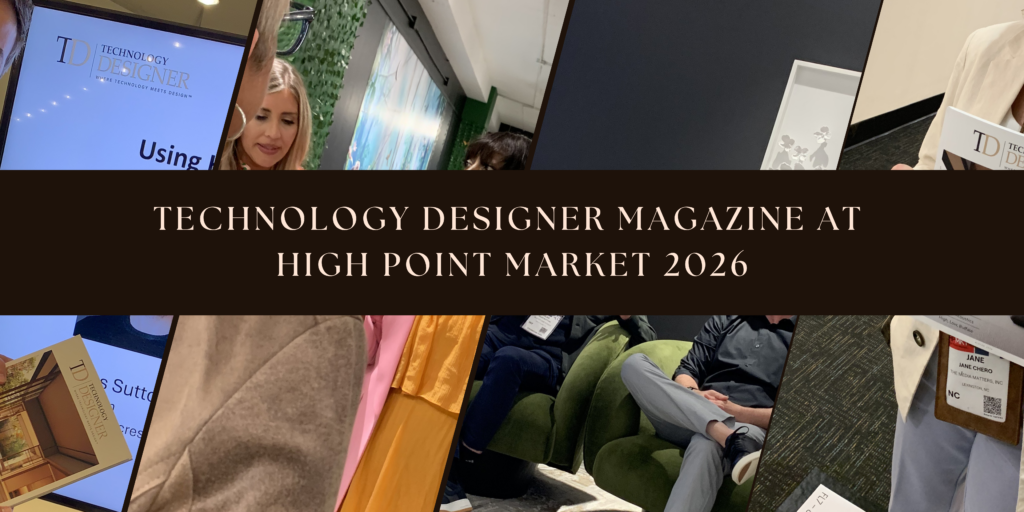
If you weren’t in High Point this spring, you missed something special. Technology Designer Magazine, together with a roster of the best-of-the-best manufacturers in Performance Home and Smart Technologies, brought a series of educational sessions to the market that, frankly, set a new bar for what trade education should look like.
In partnership with high-profile interior designers, we created an environment where the conversation wasn’t just about products, it was about how technology and design, when handled right, become inseparable. And judging by the energy in the room at every session, that message landed.
The Designers Who Showed Up Ready to Talk Tech
Celebrity designers Sharon Sherman, Christopher Grubb, and David Santiago joined us for these sessions, and each one brought genuine insight, not talking points. These are designers who live and work in the real world of luxury residential projects, and they aren’t shy about sharing exactly how technology integration affects their work, their client relationships, and their design outcomes.
The consensus? The conversation between designer and technology integrator needs to start on day one of a project. Not after the walls go up. Not when the furniture arrives. Day one. That’s a shift in thinking that our industry has been pushing for years, and hearing it come directly from the design community was genuinely gratifying.
The Manufacturer Partners Who Delivered
We assembled a lineup of manufacturer partners who I’d put up against anyone in the industry. Sonance, Crestron, DMF Lighting, Coastal Source, and Draper at Home each sent knowledgeable, personable representatives who know how to speak the language of design, design, not just spec sheets.
These are companies that have done the work to understand that their end customer isn’t just the integrator, it’s the designer, the architect, and ultimately the homeowner. And that showed in every presentation.
Four Topics, One Clear Message
The educational programming covered four areas that sit squarely at the intersection of design intent and technology execution:
Heliotropic Shading
Draper at Home walked attendees through the world of heliotropic shading window treatments designed to respond intelligently to the position of the sun throughout the day. This isn’t just convenience; it’s about managing light quality, energy performance, and protecting furnishings and art. When a designer understands what heliotropic shading can do, it changes the way they approach glazing, orientation, and interior layout entirely.
Intelligent Lighting
DMF Lighting’s session on intelligent illumination drew strong engagement, and rightfully so. Lighting is the single most powerful design variable in any space and designer’sdesigners need to know about the technology available today in order to control it intelligently. The modern lighting category has finally caught up with what great designers have always imagined. Tunable white, circadian-responsive systems, and scene-based control aren’t luxury extras anymore. They’re becoming the standard in high-performance residential design.
Outdoor Entertainment
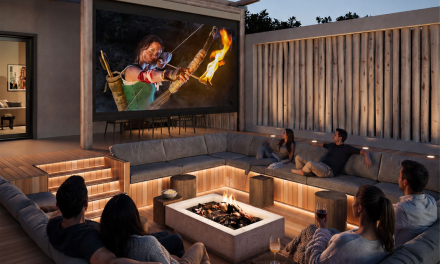
Coastal Source made a compelling case, one I’ve heard them make before, and one that deserves to be heard by every designer working on outdoor living spaces, that the exterior entertainment environment deserves the same level of design investment and performance specification as any interior room. Audio, lighting and environmental control don’t stop at the back door. Neither should the design conversation.
How Home Technologies Enhance Design
Sonance and Crestron rounded out the programming with a broader look at how integrated audio and whole-home control systems underpin the entire performance home experience. The session challenged attendees to think about technology not as an add-on, but as a core design layer, something that, when specified correctly, becomes completely invisible and entirely essential.
The Takeaway
High Point Market has always been a place where the design community gathers to see what’s new, what’s next, and what matters. What we experienced this spring is that the design community is no longer simply curious about performance home technologies; they are actively seeking the education, the partnerships, and the vocabulary to make technology a genuine part of their design process.
Technology Designer Magazine and our manufacturer partners delivered exactly that. And if the conversations that continued well after each session wrapped up are any indication, this is just the beginning of a much bigger dialogue.
See you in the fall!