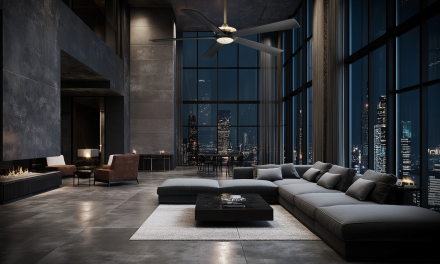
Photos courtesy of Arch-Interiors Design
As technology continues to reshape the design industry, many interior designers find themselves caught between curiosity and hesitation. They know technology matters. They know clients are asking for more. Yet many still feel that the technical side of the conversation belongs to someone else. Christopher Grubb sees it differently.
For him, technology is not a separate category that sits outside interior design. It is part of how a space functions, feels and supports the way people live. That includes lighting, audio-video, workflow, comfort and communication. It also includes the digital tools designers are now using behind the scenes, from renderings and AI-assisted imagery to marketing support and visual presentation.
At the same time, Christopher is realistic about the limitations. While technology can improve efficiency and expand services, it cannot replace proportion, authorship, finish accuracy, or the human connection that good design requires.

“The designer should be the conduit between the client and the integrator. We already undestand the lifestyle needs, the priorities of each room, the aesthetic direction, and the emotional goals of the project. We can translate that into a more meaningful conversation with the technology professional.”
I sat down with Christopher to talk about why designers need to become more comfortable participating in technology discussions, where AI has helped and frustrated him, and why the designer’s role as “quarterback” is more important than ever.
Sharon: Why is it important for designers to become more comfortable with technology?
Christopher: It is important because we are interior designers. We design the flow and function of a space. We gather the information that tells us how our clients live, what matters to them, how they entertain, how they relax, and what they want their home to feel like.
That means we already have the most important information. We are responsible for scale, mood, comfort, lighting and the overall feeling of a room. Audio-video, lighting control, shading, and other technology decisions all affect those things. So, if we step away from that part of the conversation too early, we are leaving out something that directly affects the success of the design.
I think technology also gives designers an opportunity to stand out professionally. Clients today want a higher level of service. They want to feel like the person leading their project understands the whole picture. Even if the designer is not the one programming the system or specifying every technical component, participating in that conversation shows leadership. It makes you more valuable from the very first project interview.
Designers do not need to become the technical expert. But they do need to become comfortable enough to guide the conversation.

Sharon: You often describe the designer as the “quarterback.” What do you mean by that?
Christopher: Many designers hear the word technology and immediately feel intimidated. They think, “That is not my area. I need to defer to the expert.” And of course, the system integrator is the expert on the technical side. But the designer is still the professional managing the overall vision and the client experience.
The designer should be the conduit between the client and the integrator. We already understand the lifestyle needs, the priorities of each room, the aesthetic direction, and the emotional goals of the project. We can translate that into a more meaningful conversation with the technology professional. That is what I mean by quarterback.
That makes the integrator’s job easier, because they are not starting from zero. It also makes the client feel less overwhelmed because they are not being forced to navigate another specialty without support.
If the designer removes themselves from that process, there is more room for contradiction, confusion and missed opportunities. When the designer stays involved, the process becomes more cohesive.
Technology also creates another layer of service. It gives designers one more way to distinguish themselves professionally. That is especially important with high-end clients, because they are not just looking for selections or aesthetics. They are looking for service, confidence and a seamless experience.
Technology also helps with communication and efficiency. Whether that is renderings, presentation tools, visual enhancements, or marketing support, it can help designers move ideas forward more quickly and clearly.
I have used digital tools in different ways over the years. With product work, we were using Cinema 4D to scale, then render, then move toward CAD. I would verbally describe my design vision to a renderer, and sometimes that worked well, but it was still very time intensive. There were always revisions, finish corrections, and Photoshop work at the end. Technology helped, but it did not remove the need for oversight.
Today, there are even more tools to experiment with. Cinema 4D to Meshy for 3D exploration. Krea for motion and enhancement. Topaz AI to restore details and upgrade renderings. Tools to freshen prior project images. Programs that can help communicate ideas more efficiently. That side of technology is exciting.
It is also impacting the business side. Marketing efficiency, social media strategy, communication tools, and even global communication, all of that matters. Designers can absolutely use technology to improve the way they run their businesses.
Sharon: And where do you see the negative side?
Christopher: The negative is not the technology itself. The negative is what happens when people either avoid it completely or give it too much authority.
One problem is when designers stop themselves from participating because they think they are not current enough or technical enough. That is a mistake. You do not need to know everything to stay involved. You need enough understanding to ask good questions, communicate clearly, and protect the integrity of the design process.
The other issue is overreliance, especially with AI. There is a growing tendency to assume that because AI sounds confident, it is the expert. That can be dangerous. Talent gets questioned. Experience gets questioned. Professional judgment gets questioned.
I also worry about language. There is verbiage that sounds too AI-generated, and I think that can be a disservice, especially to younger designers. If a designer cannot verbally describe a project, a concept, or a presentation in their own words, something important gets lost. The human side of communication still matters.
And then there is the missing piece that technology cannot replace: samples, interaction, engagement, connection and personal relationships. Design is not just output. It is also trust.

“Technology also helps with communication and efficiency. Whether that is renderings, presentation tools, visual enhancements, or marketing support, it can help designers move ideas forward more quickly and clearly.”
Sharon: You have spent time testing AI in your own process. What has that experience been like?
Christopher: At first, I avoided using it for product work because I did not think it was original. I did not think it felt authentic. That was my hesitation.
Then another designer said to me, “Give it the same direction you would give a renderer.” So, I tried that. And honestly, it came surprisingly close to what I was picturing. That got my attention. But then the frustration started.
The accuracy was inconsistent. It drifted. It would get close and then move away from the idea. I learned quickly that so much of it comes down to metadata and how the system is interpreting your prompts, but it does not really remember the way a person does. It does not hold the concept the way a designer or renderer might hold a concept through revision.
That becomes a challenge when you are particular about finish details, scale or proportion. I am obsessive about details, and AI still struggles there. It also still needed Photoshop.
More recently, I found myself pulling back from ChatGPT for visual concept work because it was no longer performing the way I wanted. It became less conceptual and took hours of trying. At one point, I jokingly thought, I have broken up with ChatGPT. It just was not giving me what I needed. Then it suggested Midjourney, which was interesting, but I do not particularly like Midjourney for product design either, because again, I come back to originality and authenticity.
That is the recurring issue for me. I do not want to show something that cannot really be bought, built or custom-produced. Designers have to be careful about that.
Sharon: So, where does AI fit, and where does it fall short?
Christopher: It can absolutely help with speed. It can get you closer faster. It can help generate a direction, enhance an image, sharpen a rendering, or support a presentation. That part is useful.
But it still falls short in areas that matter deeply to designers. It does not fully understand design direction. It does not consistently understand proportion. It drifts. It may not hold onto a finish detail. It may not interpret the nuance of the concept the way you intended. That is why I still see it as a tool, not a substitute for design thinking.
I also think designers need to be careful about when they use it. I would not use AI first to define project scope. I would not use it first to organize a space plan. I still believe in blocking out a floor plan, discussing it, memorizing the list of needs, making rough sketches, and working through the thinking process directly.
Hand art still matters. Rough sketches still matter. Your own ability to describe a room still matters. If you start with AI before you understand the project yourself, you are giving away too much of the process too early.

Sharon: What practical advice would you give interior designers who want to become more involved in technology?
Christopher: First, walk through a completed project with an integrator. Designers are visual people. The best education is often seeing what technology actually does in a real environment. That gives you enough language to describe it professionally to a client.
Second, define roles very clearly. If a designer is going to bill for a consulting role in technology, what does that include? Are you producing floor plans? Is the integrator producing floor plans for the electrician and related trades? Are budgets discussed before they are presented to the client? Are you present for every walk-through? The more clearly roles are defined, the stronger the process will be.
Third, understand that this is also about value. The more an interior designer can legitimately say they participate in planning and communication around technology, the stronger their consulting role becomes. That means they are not only serving the client better but also leaving less money on the table.
And finally, if a client asks about specific technology, it is fine to speak from your general knowledge and what may apply. But you can also say that the success of the project will come through communication. The integrator will take the information you have gathered and design the technology around the client’s current needs and the newest appropriate solutions. That is the partnership.
Sharon: What advice would you offer integrators and technology designers working with interior designers?
Christopher: One of the biggest mindset shifts is to stop approaching the project as though the homeowner is the only client relationship that matters. The designer can be your greatest asset if you let them be. The designer has already done a tremendous amount of discovery. They have vetted the client’s desires. They understand the function of the spaces. They know how the home is planned for living. That information is valuable. Use it.
I also think integrators lose projects when they present everything as a lump sum without enough explanation. A client may say yes to a concept in conversation, but then they receive the final number and feel overwhelmed. Sometimes they go looking for another bid, not because they dislike the idea, but because they were never guided through the investment.
Meet in person with the client and the designer if possible. Review the bid together. Explain what the items are and why they matter. Show budget-conscious thinking. Include price-friendly options. Let the client decide if they want to move up from there rather than only seeing the most expensive path first.
And be ready to discuss phasing. Clients do not always want to say they cannot do the entire budget now, but they feel relief when someone explains that the project can be planned fully and phased intelligently over time. That is a much better conversation than an item-by-item compromise.
Sharon: What do you think newer designers especially need to hear right now?
Christopher: They need to hear that technology is not a replacement for having a voice.
You still need to know how to verbally describe a project. You still need to know how to present an idea. You still need to know how to explain why a room should feel a certain way or function a certain way. You still need to know how to sketch, think, organize and communicate before the software enters the conversation.
Technology can support you. It can help you move faster. It can help polish a presentation. But it cannot be the foundation of your creative identity. The stronger your own voice is, the more useful technology becomes. Without that, it starts to flatten everything.
Sharon: What is the bigger takeaway for designers when it comes to technology?
Christopher: Do not remove yourself from the conversation. You do not have to know every device, every program, or every technical specification. But you do need enough fluency to lead, ask questions, connect the dots, and advocate for your client.
Technology is now part of how homes function and how design businesses operate. That is not changing. But the designer’s role is still critical because what clients want is not just equipment or output. They want someone who understands how they live and can make all the moving parts feel intentional. That is still our job, and that is why designers need to stay in the conversation.